Blog posts filed under Storytelling

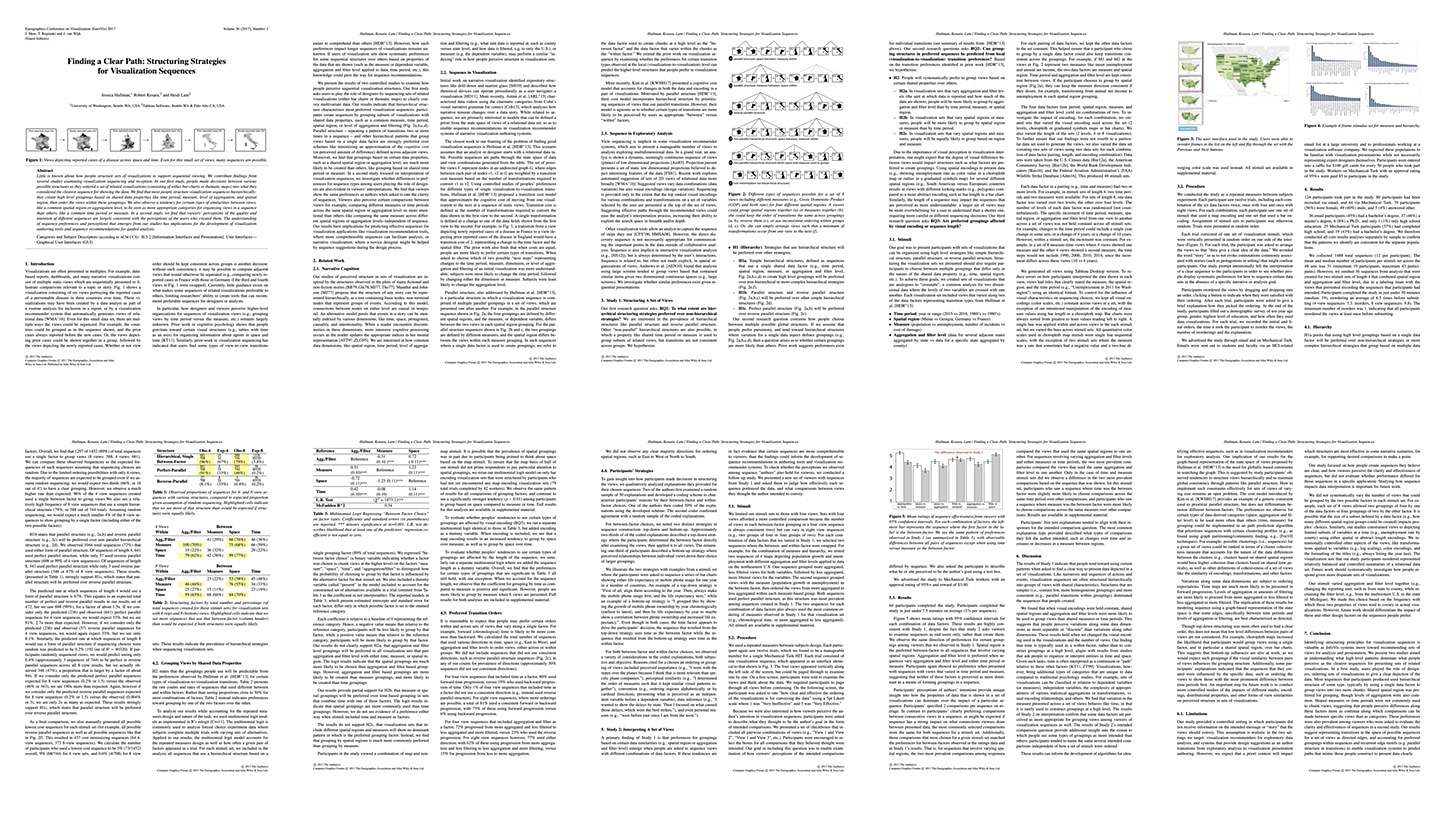
Paper: An Argument Structure for Data Stories

There is talk about stories having a beginning, middle, and end, but what does that mean for data stories? How do you create the overall structure for those? In a paper to be presented at EuroVis next week, I discuss a simple but very useful structure that I have found "in the wild," and that I believe to be useful and generalizable.

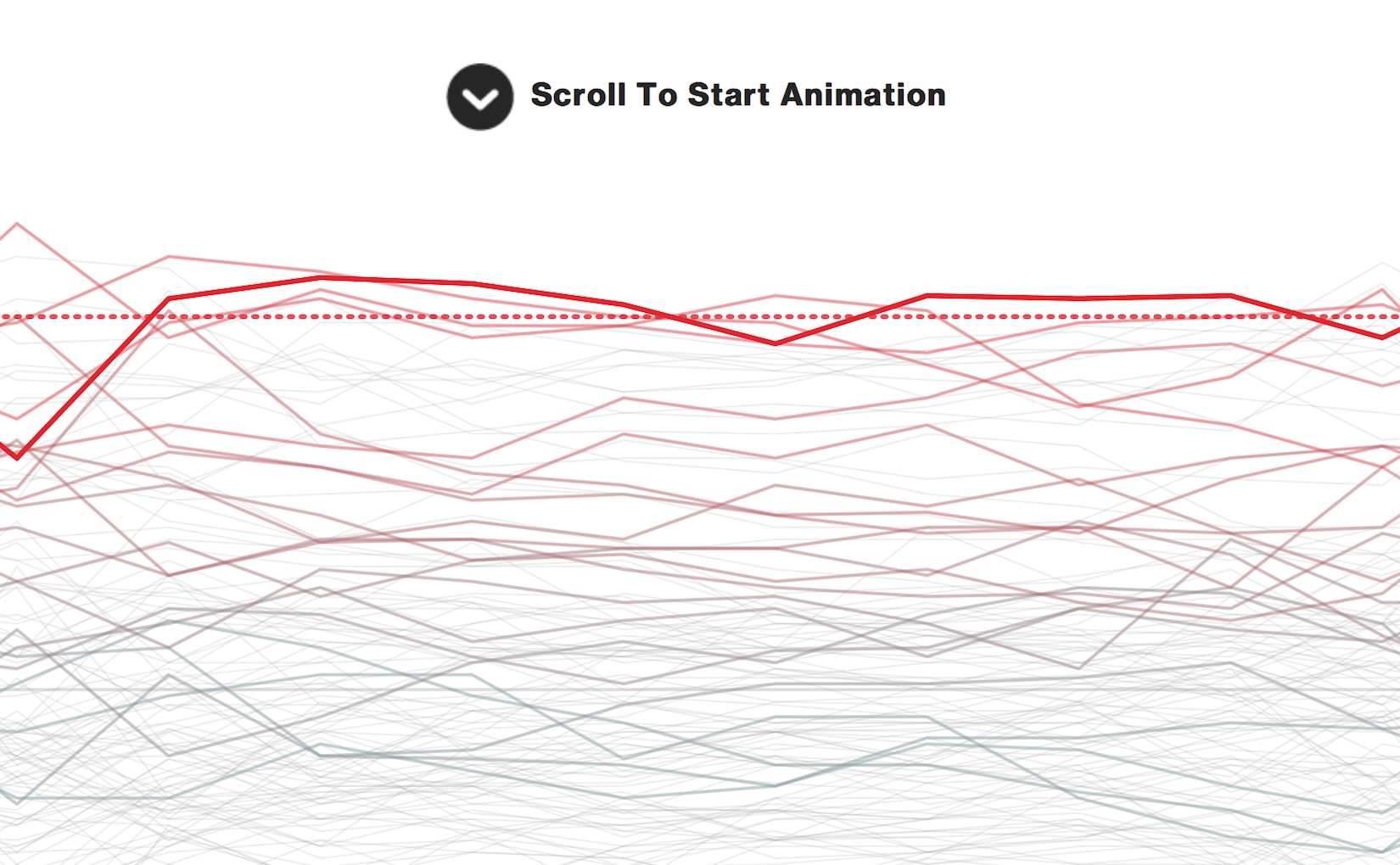
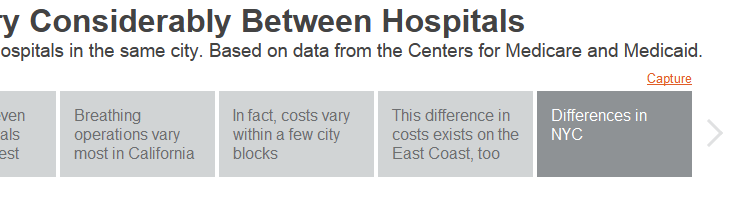
The Scrollytelling Scourge

Scrollytelling is a common way of interacting with stories these days. Scroll down and the story unfolds! Except it's often awkward, brittle, and gets in the way.

When Details Hide the Story

Kaiser Fung doesn't like this graphic that accompanied a recent story about the bird flu in the Wall Street Journal. His redesign shows a lot less overlap and a lot more detail; so much, in fact, that it obscures the point of the chart.

Conference Report: CHI 2015

Last week, I had the pleasure of attending the CHI 2015 conference in Seoul, South Korea. CHI technically stands for Computer-Human Interaction, but it has become a name rather than an acronym in recent years. And CHI’s scope is very broad, it covers many areas that are not strictly part of HCI (Human-Computer Interaction – why use one acronym when you can have two?).

The Value of Illustrating Numbers

Showing data isn't always about trying to convey an insight, or giving people the means to understand the intricacies of data. It can also be a tool to communicate a fact, an amount, or an issue beyond just the sheer numbers. Data illustration is poorly understood, but it can be very powerful.

Spelling Things Out

When visualizing data, we often strive for efficiency: show the data, nothing else. But there can be tremendous value in redundancy to make a point and drive it home. Two recent examples from news graphics illustrate this nicely.

Data Stories Episode About Data Storytelling

How is it possible that it has taken a podcast called Data Stories 35 episodes to get to the topic of data storytelling? Alberto Cairo and I helped get the topic straightened out, and I think we even convinced Moritz that stories are not the enemy of exploration. It was a fun episode to record, and it touches on many interesting topics.

Story: A Definition

What makes a story? What does a story do? In part one of this little series, I argued that stories and worlds are not opposites, but complements. In this part, I try to explain the differences between worlds and stories, and present a definition.

Stories Are Gateways Into Worlds

Moritz Stefaner recently wrote a posting titled Worlds, not stories. He basically argues that while there is a clear role for the designer of a visualization, the result should be a world that users can explore, rather than a story that they’re told. I have a few things to say about this, and will do so in two parts. This is part one.

Tapestry 2014 Announced

After a very successful Tapestry conference in February this year, we have been getting a steady stream of questions from people about another event next year. Now we're finally able to announce next year's event. And it will be awesome, again.

Story Points

I consider presentation and storytelling the next step in visualization, after most of the focus has been on exploration and analysis so far. An upcoming version of Tableau will include a feature called Story Points, which supports presentation directly in the visualization tool.

Conference Report: Tapestry 2013

About 100 attendees, three keynotes, five short talks, demos, discussions, food, music, and a fantastic atmosphere: the Tapestry conference for storytelling with data took place on February 27 in Nashville, TN. Here is a conference report with links to talk videos, as well as some first news on Tapestry 2014.

Data Storytelling in Video

I'm not a fan of video. I don't spend time randomly surfing YouTube, and when given the choice between reading an article and watching a video, I'll read. The reason is that videos often don't work well for me: they're too fast or too slow, they take a long time to get to the point, they don't let me skip around and browse easily. I'd rather be in control than having the information pre-packaged for me. But two examples have surfaced in the last few days that show data visualization can tell a very effective story in well-designed, well-paced videos.

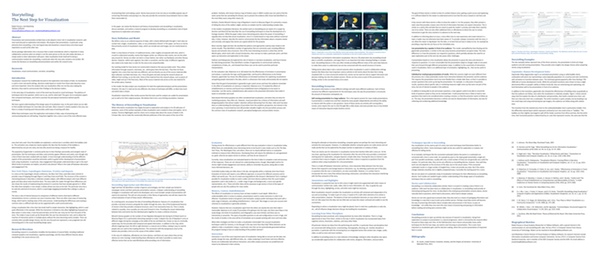
Paper: Storytelling, The Next Step for Visualization

Visualization is often considered to consist of three phases: exploration, analysis, and presentation. While the former two topics are covered well in the literature, there has been very little work specifically on presentation. In an upcoming paper, Jock Mackinlay and I argue that presentation, and in particular storytelling and communication of data, are the logical next step for the field, and provide some research directions.

Storytelling and Focus

There are many differences between data analysis and presentation. One that is often overlooked is the need to focus a story to just the essential points, and not overload it with unnecessary detail. Minard’s famous map is a great example of reduction to the bare minimum.

Storytelling: Minard vs. Nightingale

There is a lot of confusion about storytelling and what tells a story. I have argued previously that stories do not tell themselves. Rather, we tell the stories given raw materials. Some of these materials lend themselves better to ad-hoc storytelling, so we tend to say that they actually tell the story, when it's really us who do it.

Stories Don't Tell Themselves

Storytelling was a big topic at VisWeek this year: there was a workshop, a panel, and at least one paper about how to tell stories with visualization. One sentence I heard over and over was, "this photo/visualization/illustration tells a great story." But pictures don't tell stories, people do. An image, a visualization, data, etc. can only be the material the story is made from. I think it's going to be important for visualization to understand this fundamental difference.

The Visual Display of Relevant Information

When Al Gore talks about global warming, Hans Rosling shows the relationship between health and wealth, and the New York Times visualizes primary results and American consumer debt, they communicate visually. But they only use visual representation to get their point across, as a means to an end. When we want to show why visualization is effective, we have to care about the message, too – not just the method.