Blog posts filed under Visualization Basics

Rainbow Colormaps Are Not All Bad (Paper)

Rainbow colormaps are among the most derided ideas in data visualization, second only to pie charts. And yet, people use them. Why? A recent paper looks at some of the reasons why they are so popular and points to research showing that they might not be so bad if used for the right tasks. There's even opportunity for interesting research in rainbow colormaps!
Row-Level Thinking vs. Cube Thinking

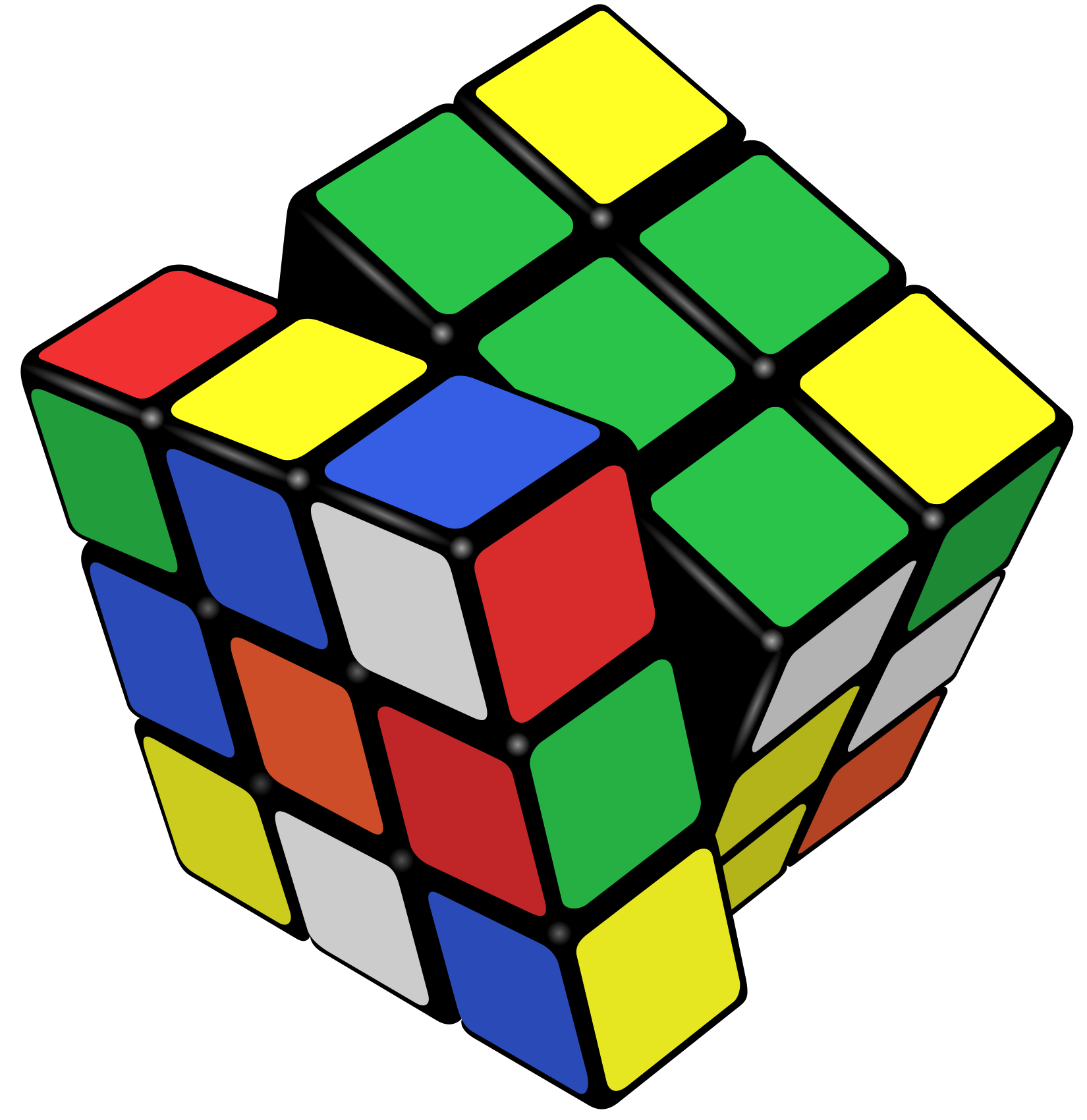
Our mental model of a dataset changes the way we ask questions. One aspect of that is the shape of the data (long or wide); an equally important issue is whether we think of the data as a collection of rows of numbers that we can aggregate bottom-up, or as a complete dataset that we can slice top-down to ask questions.

Spreadsheet Thinking vs. Database Thinking

The shape of a dataset is hugely important to how well it can be handled by different software. The shape defines how it is laid out: wide as in a spreadsheet, or long as in a database table. Each has its use, but it's important to understand their differences and when each is the right choice.

What Means Mean

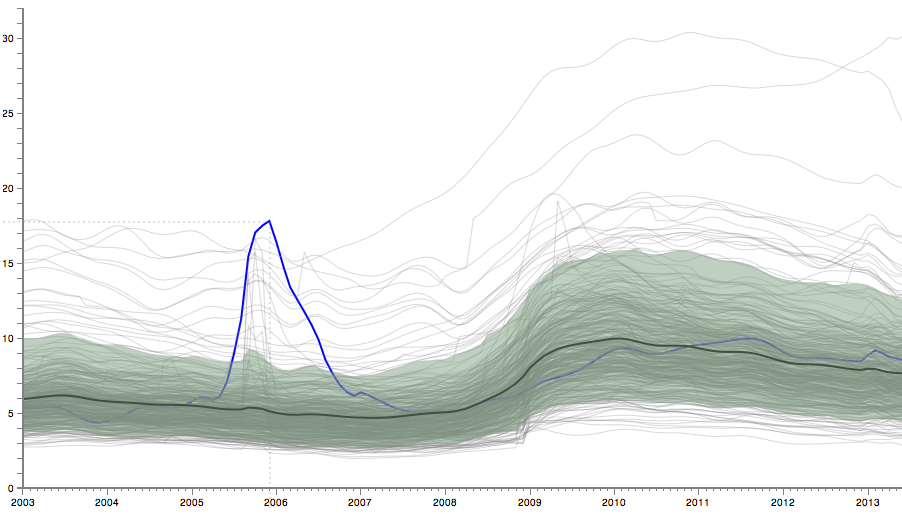
Data is often reported as a single number. Unemployment rates, housing prices, crime, etc. are all boiled down to single numbers that average over a large population. But averages, or means, hide much of the richness of the underlying data, and without at least a sense of the spread of the data values, are largely meaningless.

How The Rainbow Color Map Misleads

Colors are perhaps the visual property that people most often misuse in visualization without being aware of it. Variations of the rainbow colormap are very popular, and at the same time the most problematic and misleading.

Continuous Values and Baselines

One of the most common mistakes people make when creating charts is to cut off the vertical axis. But why is that a problem? And what can you do when you need to show data where the amount of change is small compared to the absolute values?

Data: Continuous vs. Categorical

Data comes in a number of different types, which determine what kinds of mapping can be used for them. The most basic distinction is that between continuous (or quantitative) and categorical data, which has a profound impact on the types of visualizations that can be used.

The ISOTYPE

Communicating data visually is not only about perception and precision, but also understanding. ISOTYPE was developed to bridge the gap between showing data in a way that's easy to read and at the same time easier to understand than unadorned bar charts.

Data Display vs. Data Visualization

Gregor Aisch recently wrote a posting about gauges, and how he finds them inspiring and beautiful in their simplicity, even though they are generally disliked in visualization. His posting highlights a common misconception about visualization, and a conflation of different uses of data display, that is worth exploring.

Venn Diagrams

Venn diagrams are a great way to visualize the structure of set relationships. They're also an example of a technique that works very well for a particular purpose, but that entirely fails outside its well-defined scope or when the number of sets gets too large.

Linear vs. Quadratic Change

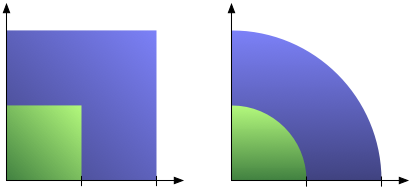
One of the most common mistakes in chart design is to scale an area by two sides at the same time, producing a quadratic effect for a linear change. That overstates the larger numbers and produces a badly skewed chart. A little care and some basic high-school math can help avoid the problem.