Visualization is not Periodic, Period!

Periodic Table of Visualization Methods

Of all the sins committed against visualization on the Internet, the Periodic Table of Visualization Methods stands out as the most egregious. Its collection of actual visualization methods, structural diagrams, and feel-good business bullshit does not fit a structure that was devised to understand the world – and that is actually a very effective visualization in itself.

Visualization Methods

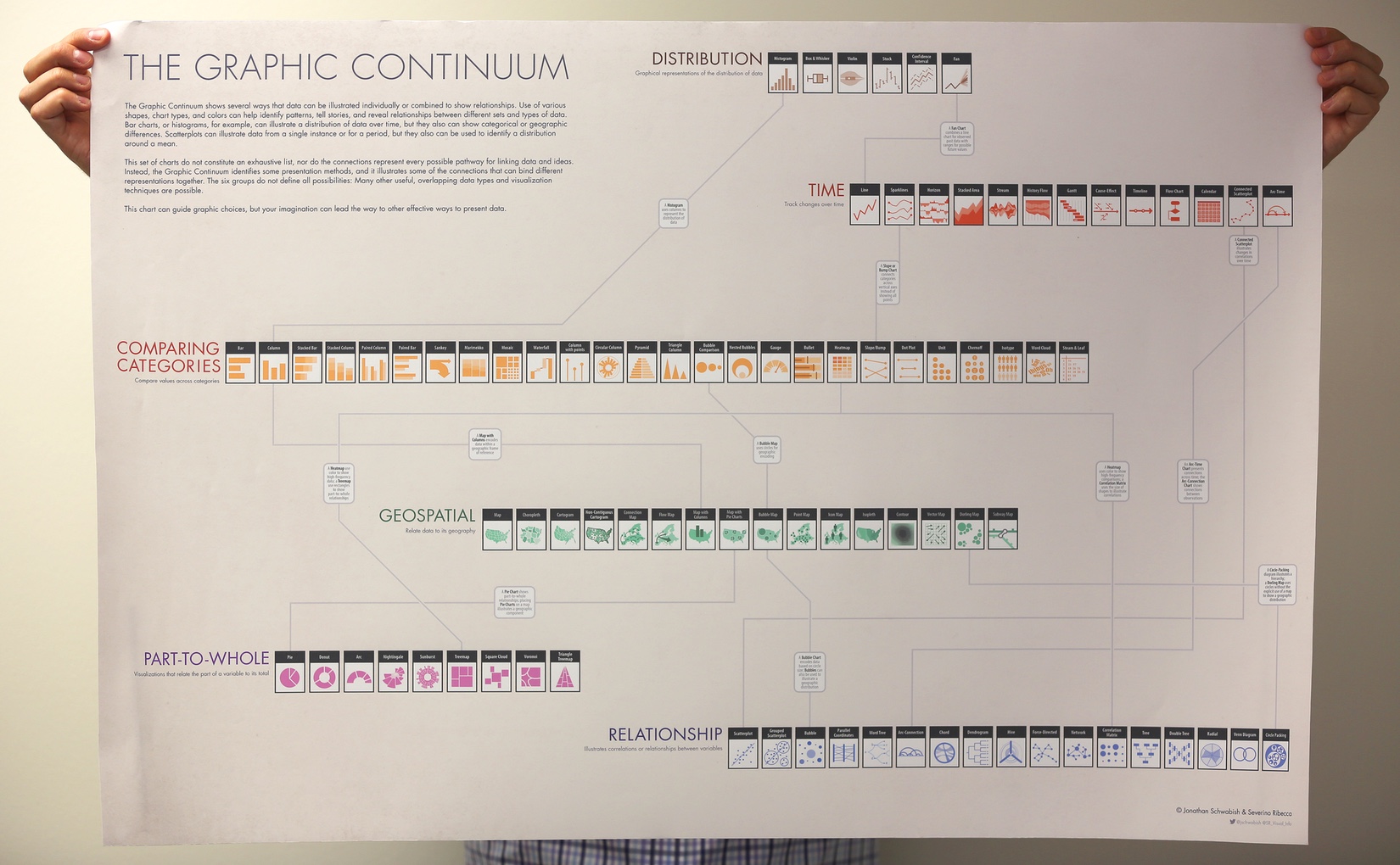
A good part of the left half of the diagram is comprised of actual visualization methods. There are line charts, bar charts, parallel coordinates, etc. Of course, there's already a taste of the things to come in the "Continuum" and the "Scenario Matrix" example for Cartesian coordinates. And even though the Information Visualization category is defined as being based on data, it contains flow charts, entity relationship models, etc., which are part of the next category.

Structural Diagrams

These are diagrams that are not based on data in the sense that they visualize a dataset. These are modeling tools, and they are useful, but they are not visualizations. Flow charts, entity relationship models, etc. provide a means of depicting and reason about structures, like the control flow in a program or the table layout in a database.

Most of these are under the Information Visualization category, while the remaining categories like Concept Visualization, Strategy Visualization, etc. fall under the next heading.

Feel-Good Business Bullshit

Argument Slide, Force Field Diagram

You need to fill the time at those seminars with something. When you're not teaching your clients to juggle, ride a unicycle, or fire-walk, you talk about the Argument Slide or the Force Field Diagram. It helps pass the time, and everybody enjoys sharing information in such an informal setting. And it's exactly the kind of stuff that keeps the Dilbert guy in business drawing his terrible cartoons. This is not visualization.

The Structure

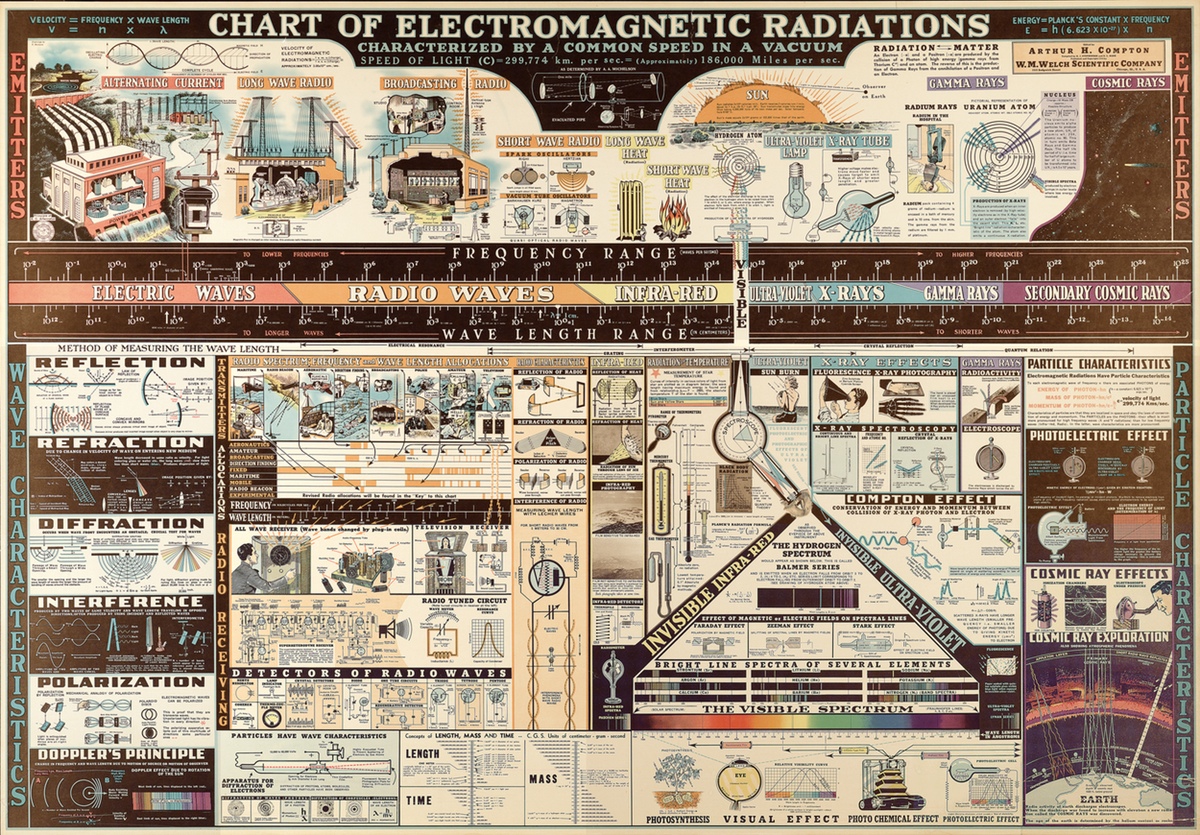
Adding insult to injury, the structure they have abused is actually a remarkable visualization it itself. The Periodic Table of Elements was developed by Dmitri Mendeleev after discovering patterns in how different elements behaved depending on the number of valence electrons (electrons in the outermost layer around the atom) and the number of layers. The simple ordering in the table nicely groups the elements into different kinds of metals, non-metals, noble gases, etc.

The table provides a kind of visualization of the underlying data (the number of electrons), revealing its periodic structure. It organizes the information about elements in a way that makes the relationships between elements obvious; much like the white and black keys on a piano keyboard.

Other Idiotic Periodic Tables

Visualization is not the only thing the periodic table can be misapplied to. There is a Periodic Table of Typefaces, a Periodic Table of Texting (a t-shirt that's apparently no longer sold), a Periodic Table of Beer, a Periodic Table of Awesomeness, etc. Of course, none of these depict structures that are actually periodic. Camdon Wilde, who designed the typefaces table, freely admits that:

Unfortunately, the typefaces could not be sorted exactly numerically on the table while at the same time keeping them in groups of families and classes. It had to be one or the other. Of course it COULD have been done but I would have had to seriously sacrifice aesthetics of the overall design (i.e. it wouldn't have come out looking AT ALL like a traditional periodic table.)

There is something about this structure that is vaguely familiar, has an air of science, and the fact that people like structure (just look at all those lists out there on the Internet) that just draws people in and compels them to email all the people they know about this abomination.

When you get that next email pointing you to this awesome resource, don't forward it. Only you can stop this nonsense.

---

Comments

Idiotic Periodic Tables

Anonymous's picture

Why did you cross out "Idiotic"? I have disliked these pseudo-scientific displays since the first one I ever ssaw. There's no periodicity, no order by row or column. Just some doofus pigeonholing items almost at random in a familiar grid.

I couldn't find the white-out

Robert Kosara's picture

But that's the thing: what makes them so attractive? There must be some psychological effect behind this.

Dilbert is terrible? C'mon!

Anonymous's picture

Dilbert is terrible? C'mon!

Displays that give infovis a bad name

stephenfew's picture

Robert,

It's nice to read an opinion of "The Periodic Table of Information Visualization" that is consistent with mine from another person working in the field. I wrote about the absurdity of this display back on January 8th, 2007 and even used it as an example of the kind of display that gives infovis a bad name in my capstone presentation at InfoVis 2007. Until now, I have only read one other negative opinion besides yours, which was written by Juan Dürsteler in May, 2007. This display is so embarrassingly ineffective, it's surprising that when it was getting so much positive attention when it was first published that others working in our field didn't raise their voices to say that it did not represent what information visualization has to offer. Was this because academics are loathe to criticize the work of other academics? Isn't academia the proper place for such critique?

Steve

Criticism is a good idea

Robert Kosara's picture

I remember reading your posting, I just didn't think of it when writing this. You're much more systematic about pointing out the flaws in this design.

But regarding criticism in academia: that would be a good idea. But in many cases, that is done in private, and usually without telling the person whose work is being discussed – unless it's a review, in which case the reviewer/critic is anonymous. We don't have a culture of criticism, and many people are in fact very adverse (critical?) of it. That's why I keep pushing the idea: if it was what everybody was doing, there would be no point in doing that.

We need a lot more critical writing, so people don't just see the endless, mindless reblogging, but a spectrum of thoughts and opinion. See also: A Better Vis Web Community

Yes we can fool a fool!

Anonymous's picture

To be honest, the visualization is as bad as several of the visualization it references. Academic rigor would call for a more decent classification - which definitely would not fit into the periodic system framework.

InfoVis has a certain artistic freedom which makes is often hard to classify. The "only" important dimension which might be left for any kind of visualization is the efficiency a visualization has in coding resp. decoding information.

Martin

Critical of the Critical: Where's Yours?

Anonymous's picture

You raise some good “qualified” points about the errors, omissions, and logic flaws of this particular representation. But at the same time I wonder if this is the best way for a community of infovis practitioners to “criticize” the works of others. Reminds me a bit of walking through a museum and saying “that painting sucks” - can you do better? Let us see your attempt to make better of a valid goal to provide a useful visualization of visualization methods. I’m sure you could count on the community to provide useful and constructive inputs to make it better and therefore benefit the effort...the best challenge to nonsense is to make sense...

I'm not finding any of your own work on this site?

Re: Critical of the Critical: Where's Yours?

Anonymous's picture

In response to Anonymous asking "where's yours", how about Melanie Tory and Torsten Moller's InfoVis 2004 paper "Rethinking Visualization: A High-Level Taxonomy" (search for it at scholar.google)