Robert Kosara's Publications

Thumbnail for Business Data Visualization, Beyond the Boring

Business Data Visualization, Beyond the Boring

Business uses of charts and visualizations, and by extension business users, are usually considered mundane and boring. But they, too, want to get their audience's attention, emphasize a point they're making, or simply break out of the monotony of the limited palette of common chart types. I believe that there is ample opportunity to develop new approaches and build better tools that go far beyond the current one-size-fits-all approach to creating charts - much more than is currently recognized… [More]

PDF DOI
Thumbnail for Notebooks for Data Analysis and Visualization: Moving Beyond the Data

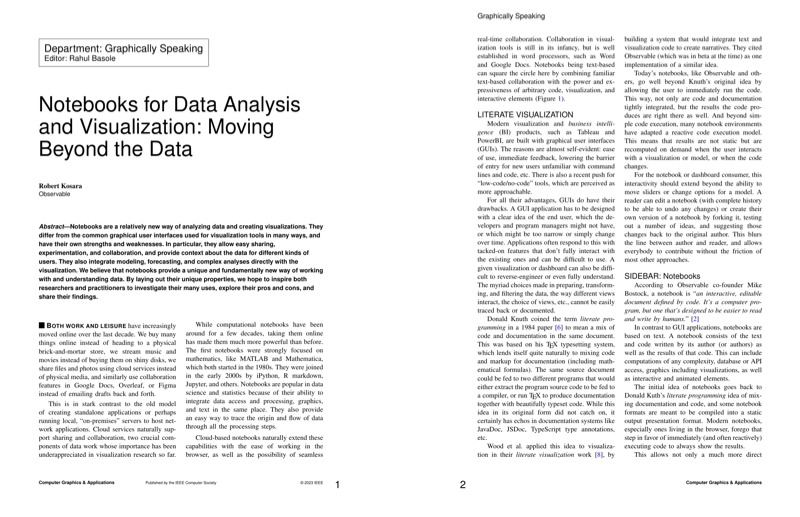
Notebooks for Data Analysis and Visualization: Moving Beyond the Data

Notebooks are a relatively new way of analyzing data and creating visualizations. They differ from the common graphical user interfaces used for visualization tools in many ways, and have their own strengths and weaknesses. In particular, they allow easy sharing, experimentation, and collaboration, and provide context about the data for different kinds of users. They also integrate modeling, forecasting, and complex analyses directly with the visualization. We believe that notebooks provide a… [More]

PDF DOI
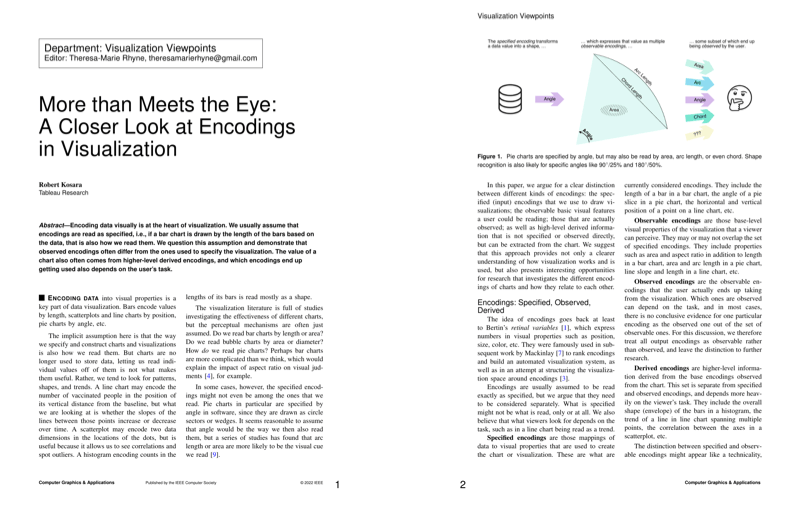
Thumbnail for More Than Meets the Eye: A Closer Look at Encodings in Visualization

More Than Meets the Eye: A Closer Look at Encodings in Visualization

Encoding data visually is at the heart of visualization. We usually assume that encodings are read as specified (i.e., if a bar chart is drawn by the length of the bars based on the data, that is also how we read them). In this paper, we question this assumption and demonstrate that observed encodings often differ from the ones used to specify the visualization. The value of a chart also often comes from higher level derived encodings, and which encodings end up getting used also depends on the… [More]

PDF DOI

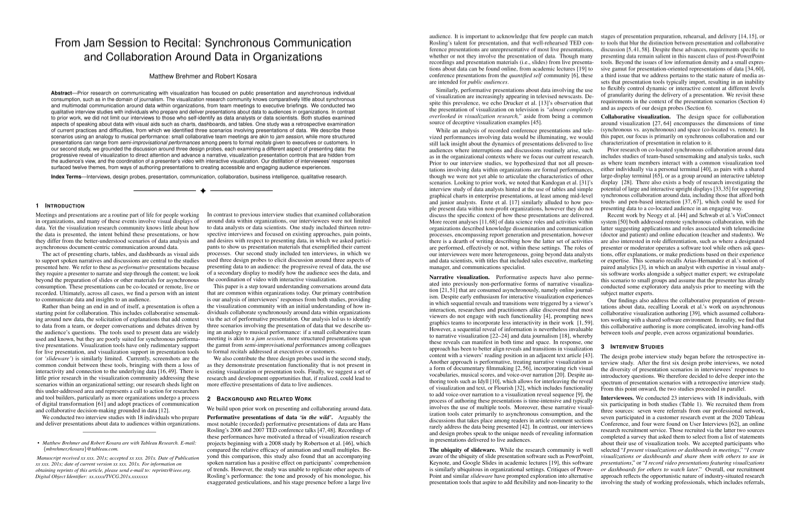
From Jam Session to Recital: Synchronous Communication and Collaboration Around Data in Organizations

Prior research on communicating with visualization has focused on public presentation and asynchronous individual consumption, such as in the domain of journalism. The visualization research community knows comparatively little about synchronous and multimodal communication around data within organizations, from team meetings to executive briefings. We conducted two qualitative interview studies with individuals who prepare and deliver presentations about data to audiences in organizations. In… [More]

PDF DOI

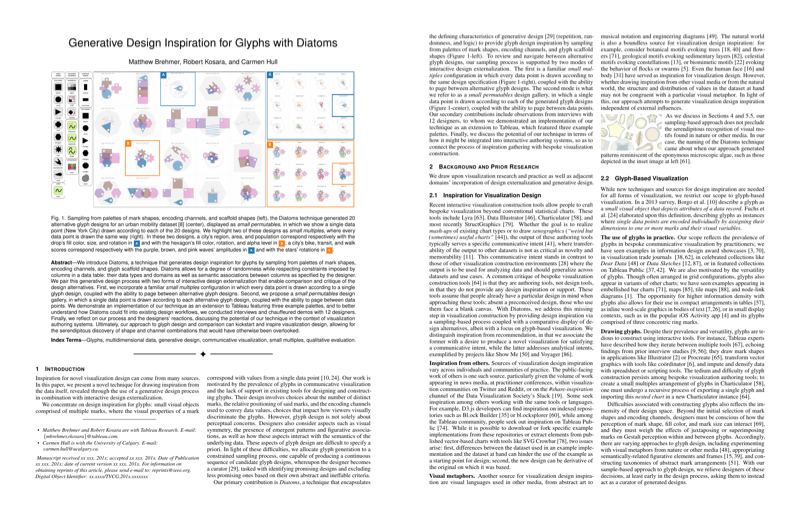
Generative Design Inspiration for Glyphs with Diatoms

We introduce Diatoms, a technique that generates design inspiration for glyphs by sampling from palettes of mark shapes, encoding channels, and glyph scaffold shapes. Diatoms allows for a degree of randomness while respecting constraints imposed by columns in a data table: their data types and domains as well as semantic associations between columns as specified by the designer. We pair this generative design process with two forms of interactive design externalization that enable comparison and… [More]

PDF DOI
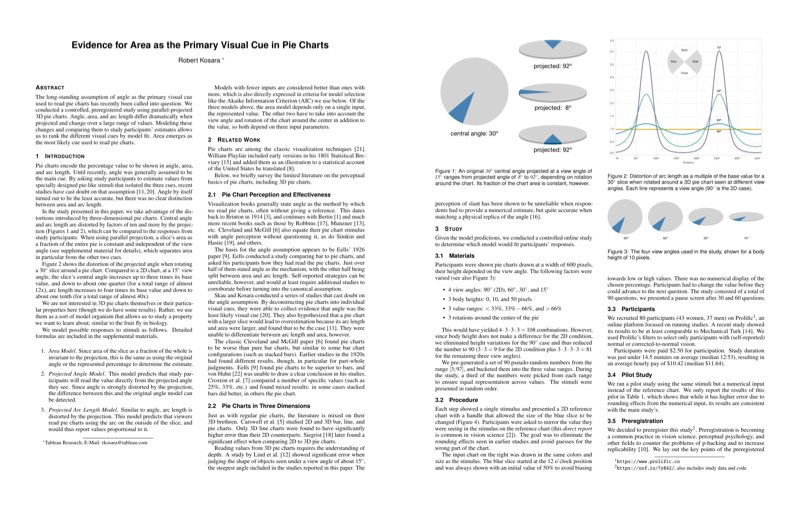
Thumbnail for Evidence for Area as the Primary Visual Cue in Pie Charts

Evidence for Area as the Primary Visual Cue in Pie Charts

The long-standing assumption of angle as the primary visual cue used to read pie charts has recently been called into question. We conducted a controlled, preregistered study using parallel-projected 3D pie charts. Angle, area, and arc length differ dramatically when projected and change over a large range of values. Modeling these changes and comparing them to study participants’ estimates allows us to rank the different visual cues by model fit. Area emerges as the most likely cue used to read… [More]

PDF DOI Data

Guess Me If You Can: A Visual Uncertainty Model for Transparent Evaluation of Disclosure Risks in Privacy-Preserving Data Visualization

Minimization of disclosure risks is a key challenge in publicly available visualizations that can potentially reveal personal information. Such risks are inherently dependent on the amount of information that adversaries can gain by manipulating visual representations and by using their background knowledge. Conventional risk quantification models proposed in the field of privacy-preserving data mining suffer from a lack of transparency in letting data owners control privacy parameters and… [More]

PDF DOI

The Impact of Distribution and Chart Type on Part-to-Whole Comparisons

Pie charts and treemaps are commonly used in business settings to show part-to-whole relationships. In a study, we compare pie charts, treemaps, stacked bars, and two circular charts when answering part-to-whole questions with multiple slices and different distributions of values. We find that the circular charts, including the unusual variations, perform better than the treemap, and that their performance depends on whether participants are asked to judge the largest slice or a smaller one.

PDF DOI

Circular Part-to-Whole Charts Using the Area Visual Cue

Studies of chart types can reveal unexplored design spaces, like the circular diagrams used in recent studies on pie charts. In this paper, we explore several variations of part-to-whole charts that use area to represent a fraction within a circle. We find one chart that performs very similarly to the pie chart, even though it is visually more complex. Centered shapes turn out to lead to much worse accuracy than any other stimuli, even the same shape when not centered. These first results point… [More]

PDF DOI
Thumbnail for Skipping the Replication Crisis in Visualization: Threats to Study Validity and How to Address Them

Skipping the Replication Crisis in Visualization: Threats to Study Validity and How to Address Them

Replications are rare in visualization research, but if they were more common, it is not unreasonable to believe that they would show a similar rate of unreproducible results as in the psychological and social sciences. While a replication crisis in visualization research would be a helpful wake-up call, examining and correcting the underlying problems in many studies is ultimately more productive. In this paper, we survey the state of replication in visualization research. We examine six… [More]

PDF DOI Talk

Communicating Data to an Audience

Communicating data in an effective and efficient story requires the content author to recognize the needs, goals, and knowledge of the intended audience. Do we, the authors, need to explain how a particular chart works? It depends on the audience. Does the data need to be traced back to its source? Depends on the audience. Can we skip obvious patterns and correlations and dive right into the deeper points? Depends on the audience. Do we need to explain what the findings in the data mean in terms… [More]

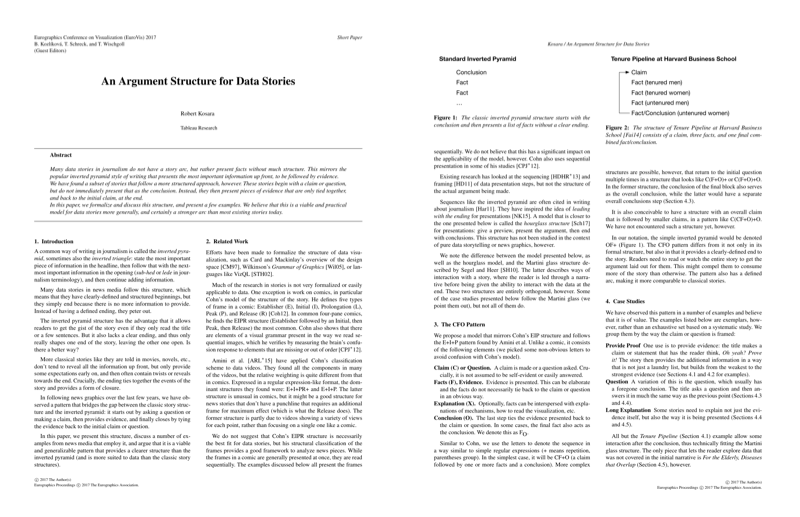
Thumbnail for An Argument Structure for Data Stories

An Argument Structure for Data Stories

Many data stories in journalism do not have a story arc, but rather present facts without much structure. This mirrors the popular inverted pyramid style of writing that presents the most important information up front, to be followed by evidence. We have found a subset of stories that follow a more structured approach, however. These stories begin with a claim or question, but do not immediately present that as the conclusion. Instead, they then present pieces of evidence that are only tied… [More]

PDF DOI
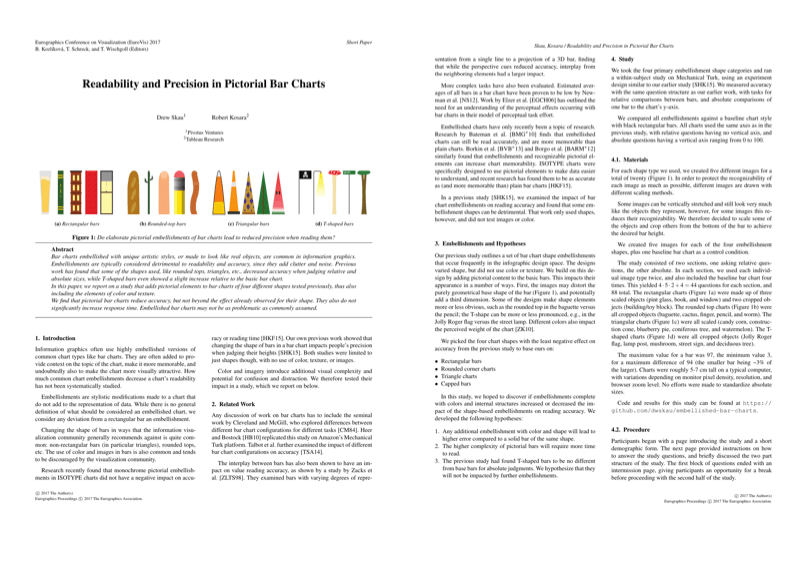
Thumbnail for Readability and Precision in Pictorial Bar Charts

Readability and Precision in Pictorial Bar Charts

Bar charts embellished with unique artistic styles, or made to look like real objects, are common in information graphics. Embellishments are typically considered detrimental to readability and accuracy, since they add clutter and noise. Previous work has found that some of the shapes used, like rounded tops, triangles, etc., decreased accuracy when judging relative and absolute sizes, while T-shaped bars even showed a slight increase relative to the basic bar chart. In this paper, we report on… [More]

PDF DOI
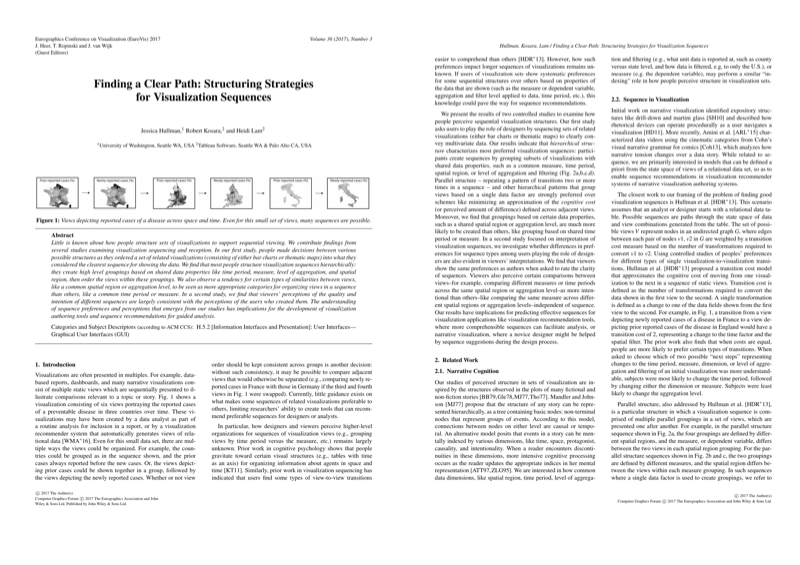
Thumbnail for Finding a Clear Path: Structuring Strategies for Visualization Sequences

Finding a Clear Path: Structuring Strategies for Visualization Sequences

Little is known about how people structure sets of visualizations to support sequential viewing. We contribute findings from several studies examining visualization sequencing and reception. In our first study, people made decisions between various possible structures as they ordered a set of related visualizations (consisting of either bar charts or thematic maps) into what they considered the clearest sequence for showing the data. We find that most people structure visualization sequences… [More]

PDF DOI Talk

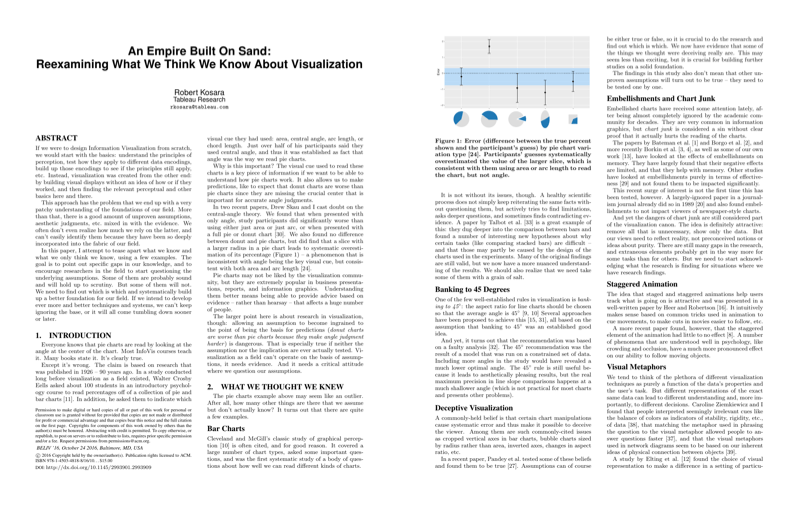
An Empire Built On Sand: Reexamining What We Think We Know About Visualization

If we were to design Information Visualization from scratch, we would start with the basics: understand the principles of perception, test how they apply to different data encodings, build up those encodings to see if the principles still apply, etc. Instead, visualization was created from the other end: by building visual displays without an idea of how or if they worked, and then finding the relevant perceptual and other basics here and there. This approach has the problem that we end up with… [More]

PDF DOI

Reflecting on the Design Criteria for Explanatory Visualizations

The visualization field has developed a good set of design criteria, metrics, and methods to assess visualization techniques and systems. These are all focused on analytical and exploratory uses, however. A large class of visualizations are created to present and communicate data and issues, however, and are seen by millions of people. We do not currently have a good grasp of what criteria should be used to systematically design and compare them, and how to do that. The aim of this paper is to… [More]

PDF
Thumbnail for Judgment Error in Pie Chart Variations

Judgment Error in Pie Chart Variations

Pie charts and their variants are prevalent in business settings and many other uses, even if they are not popular with the academic community. In a recent study, we found that contrary to general belief, there is no clear evidence that these charts are read based on the central angle. Instead, area and arc length appear to be at least equally important. In this paper, we build on that study to test several pie chart variations that are popular in information graphics: exploded pie chart, pie… [More]

PDF DOI Data
Thumbnail for Arcs, Angles, or Areas: Individual Data Encodings in Pie and Donut Charts

Arcs, Angles, or Areas: Individual Data Encodings in Pie and Donut Charts

Pie and donut charts have been a hotly debated topic in the visualization community for some time now. Even though pie charts have been around for over 200 years, our understanding of the perceptual factors used to read data in them is still limited. Data is encoded in pie and donut charts in three ways: arc length, center angle, and segment area. For our first study, we designed variations of pie charts to test the importance of individual encodings for reading accuracy. In our second study, we… [More]

PDF DOI Talk Data

BRIDGES: A System to Enable Creation of Engaging Data Structures Assignments with Real-World Data and Visualizations

Although undergraduate enrollment in Computer Science has remained strong and seen substantial increases in the past decade, retention of majors remains a significant concern, particularly for students at the freshman and sophomore level that are tackling foundational courses on algorithms and data structures. In this work, we present BRIDGES, a software infrastructure designed to enable the creation of more engaging assignments in introductory data structures courses by providing students with… [More]

PDF DOI
Thumbnail for Presentation-Oriented Visualization Techniques

Presentation-Oriented Visualization Techniques

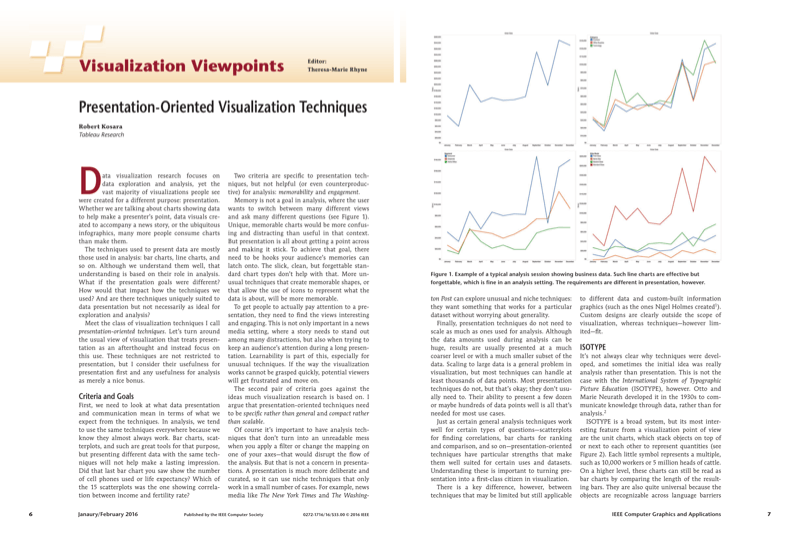
Data visualization research focuses on data exploration and analysis, yet the vast majority of visualizations people see were created for a different purpose: presentation. Whether we are talking about charts showing data to help make a presenter’s point, data visuals created to accompany a news story, or the ubiquitous infographics, many more people consume charts than make them.The techniques used to present data are mostly those used in analysis: bar charts, line charts, and so on. Although… [More]

PDF DOI
Thumbnail for The Connected Scatterplot for Presenting Paired Time Series

The Connected Scatterplot for Presenting Paired Time Series

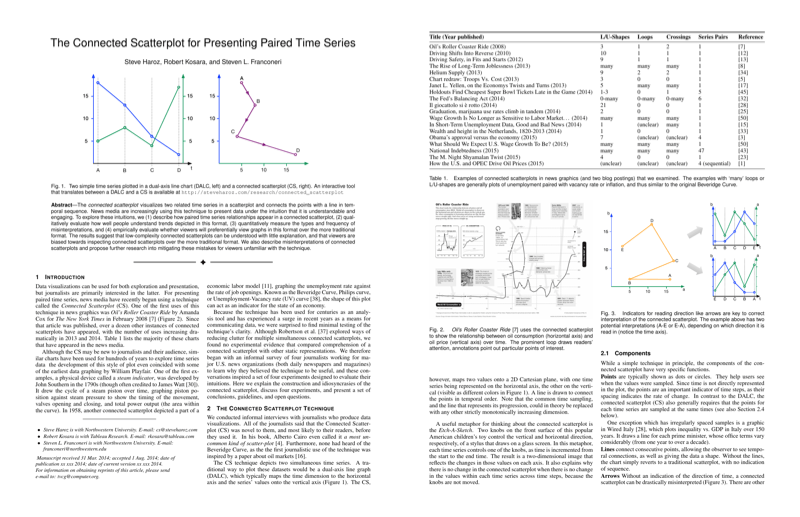
The connected scatterplot visualizes two related time series in a scatterplot and connects the points with a line in temporal sequence. News media are increasingly using this technique to present data under the intuition that it is understandable and engaging. To explore these intuitions, we (1) describe how paired time series relationships appear in a connected scatterplot, (2) qualitatively evaluate how well people understand trends depicted in this format, (3) quantitatively measure the types… [More]

PDF DOI
Thumbnail for An Evaluation of the Impact of Visual Embellishments in Bar Charts

An Evaluation of the Impact of Visual Embellishments in Bar Charts

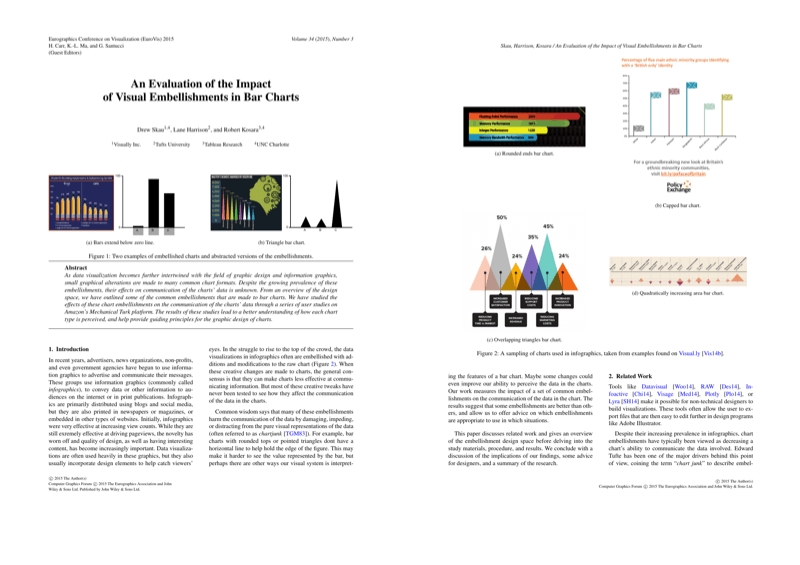
As data visualization becomes further intertwined with the field of graphic design and information graphics, small graphical alterations are made to many common chart formats. Despite the growing prevalence of these embellishments, their effects on communication of the charts’ data is unknown. From an overview of the design space, we have outlined some of the common embellishments that are made to bar charts. We have studied the effects of these chart embellishments on the communication of the… [More]

PDF DOI
Thumbnail for ISOTYPE Visualization – Working Memory, Performance, and Engagement with Pictographs

ISOTYPE Visualization – Working Memory, Performance, and Engagement with Pictographs

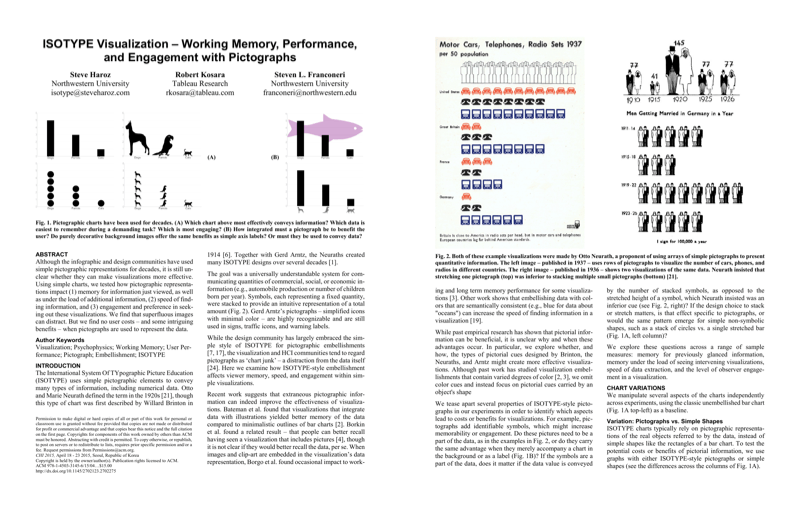
Although the infographic and design communities have used simple pictographic representations for decades, it is still unclear whether they can make visualizations more effective. Using simple charts, we tested how pictographic representations impact (1) memory for information just viewed, as well as under the load of additional information, (2) speed of finding information, and (3) engagement and preference in seeking out these visualizations. We find that superfluous images can distract. But… [More]

PDF DOI

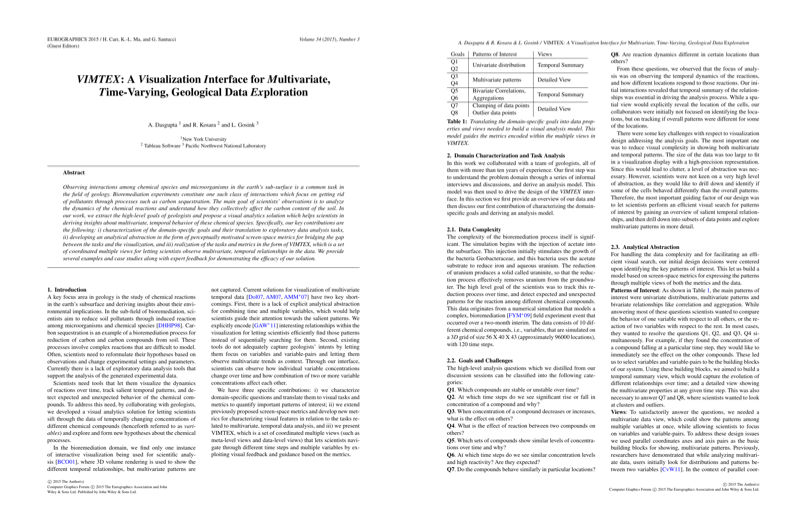
VIMTEX: A Visualization Interface for Multivariate, Time-Varying, Geological Data Exploration

Observing interactions among chemical species and microorganisms in the earth’s sub-surface is a common task in the field of geology. Bioremediation experiments constitute one such class of interactions which focus on getting rid of pollutants through processes such as carbon sequestration. The main goal of scientists’ observations is to analyze the dynamics of the chemical reactions and understand how they collectively affect the carbon content of the soil. In our work, we extract the… [More]

PDF DOI
Thumbnail for Tapestry: A Different Kind of Conference on Storytelling with Data

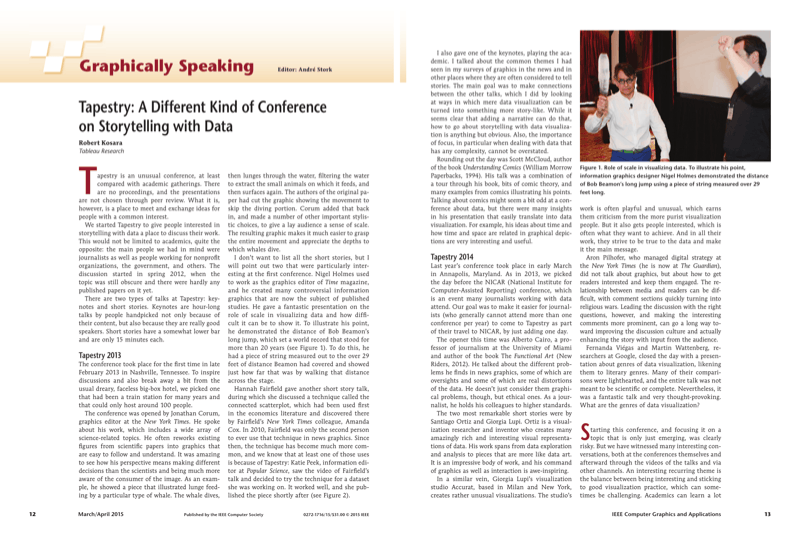
Tapestry: A Different Kind of Conference on Storytelling with Data

Tapestry is an unusual conference, at least compared with academic gatherings. There are no proceedings, and the presentations are not chosen through peer review. What it is, however, is a place to meet and exchange ideas for people with a common interest.

PDF DOI

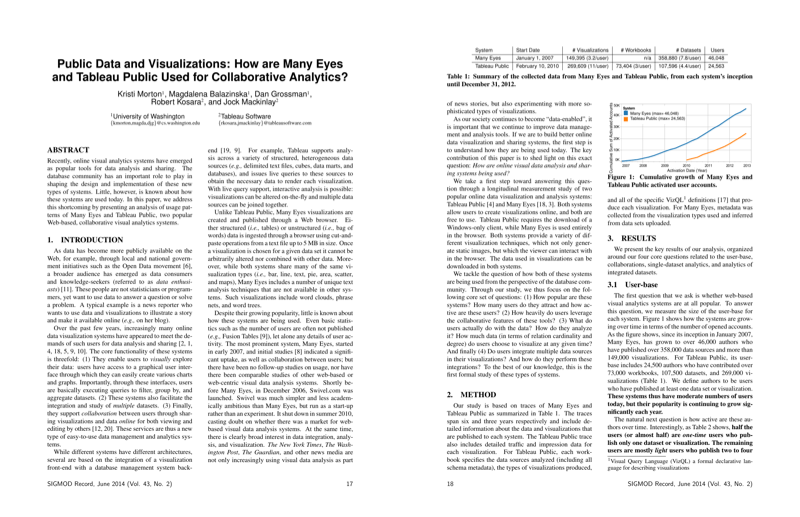
Public Data and Visualizations: How are Many Eyes and Tableau Public Used for Collaborative Analytics?

Recently, online visual analytics systems have emerged as popular tools for data analysis and sharing. The database community has an important role to play in shaping the design and implementation of these new types of systems. Little, however, is known about how these systems are used today. In this paper, we address this shortcoming by presenting an analysis of usage patterns of Many Eyes and Tableau Public, two popular Web-based, collaborative visual analytics systems.

PDF DOI

Measuring Privacy and Utility in Privacy-Preserving Visualization

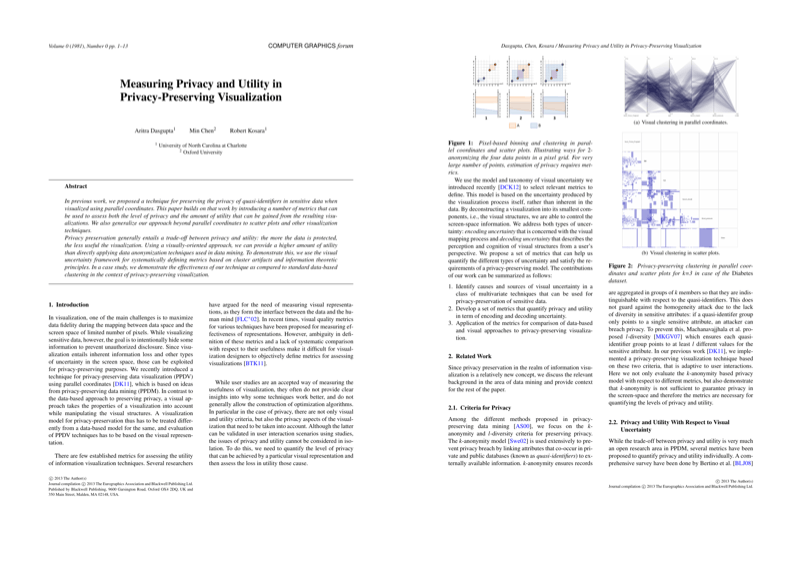
In previous work, we proposed a technique for preserving the privacy of quasi-identifiers in sensitive data when visualized using parallel coordinates. This paper builds on that work by introducing a number of metrics that can be used to assess both the level of privacy and the amount of utility that can be gained from the resulting visualizations. We also generalize our approach beyond parallel coordinates to scatter plots and other visualization techniques. Privacy preservation generally… [More]

PDF DOI

Size Judgment and Comparison in Tag Clouds

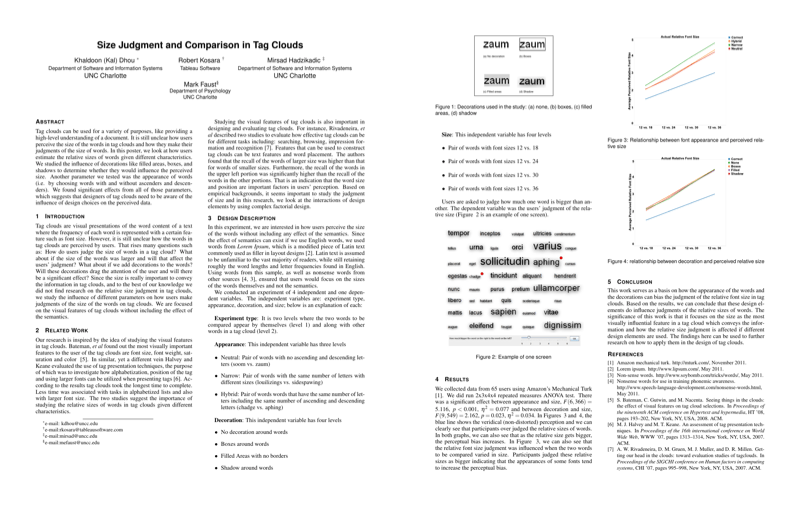
Tag clouds can be used for a variety of purposes, like providing a high-level understanding of a document. It is still unclear how users perceive the size of the words in tag clouds and how they make their judgments of the size of words. In this poster, we look at how users estimate the relative sizes of words given different characteristics. We studied the influence of decorations like filled areas, boxes, and shadows to determine whether they would influence the perceived size. Another… [More]

PDF
Thumbnail for Storytelling: The Next Step for Visualization

Storytelling: The Next Step for Visualization

Presentation and communication of data have so far played a minor role in visualization research, with most work focused on exploration and analysis. We propose that presentation, in particular using elements from storytelling, is the next logical step and should be a research focus of at least equal importance as each of the other two. Stories package information into a structure that is easily remembered, which is important in many collaborative scenarios when an analyst is not the same person… [More]

PDF DOI

InfoVis Is So Much More: A Comment on Gelman and Unwin and an Invitation to Consider the Opportunities

I welcome the opportunity to respond to Andrew Gelman and Antony Unwin’s article, Infovis and Statistical Graphics: Different Goals, Different Looks. Their view of information visualization is very distorted, but unfortunately not uncommon. In the following, I will try to give readers a sense of what information visualization (InfoVis) is really about, show some recent contributions, list some challenges, and show that there is a lot of opportunity for collaboration between InfoVis and… [More]

PDF DOI
The Importance of Tracing Data Through the Visualization Pipeline

Visualization research focuses either on the transformation steps necessary to create a visualization from data, or on the perception of structures after they have been shown on the screen. We argue that an end-to-end approach is necessary that tracks the data all the way through the required steps, and provides ways of measuring the impact of any of the transformations. By feeding that information back into the pipeline, visualization systems will be able to adapt the dis- play to the data to… [More]

PDF DOI
Meta Parallel Coordinates for Visualizing Features in Large, High-Dimensional, Time-varying Data

Managing computational complexity and designing effective visual representations are two important challenges for the visualization of large, complex, high-dimensional datasets. Parallel coordinates are an effective technique for visualizing high-dimensional data, but do not scale well to very large datasets. The addition of the tempo- ral dimension leads to more uncertainty due to clutter on screen. Consequently, this poses a significant challenge for visually find- ing trends and patterns that… [More]

PDF DOI
Gene-RiViT: A Visualization Tool for Comparative Analysis of Gene Neighborhoods in Prokaryotes

The genomes of prokaryotes are dynamic and shuffling of gene order occurs frequently, along with horizontal transfer of genes from external sources. Local conservation of gene order tends to reflect functional constraints on the genome or on a biochemical subsystem. Comparison of the local gene neighborhoods surrounding a gene of interest gives insight into evolutionary history and functional potential of the gene. The Genomic Ring Visualization Tool (Gene-RiViT) is a high speed, intuitive… [More]

PDF DOI
Conceptualizing Visual Uncertainty in Parallel Coordinates

Uncertainty is an intrinsic part of any visual representation in visualization, no matter how precise the input data. Existing research on uncertainty in visualization mainly focuses on depicting data-space uncertainty in a visual form. Uncertainty is thus often seen as a problem to deal with, in the data, and something to be avoided if possible. In this paper, we highlight the need for analyzing visual uncertainty in order to design more effective visual representations. We study various forms… [More]

PDF DOI
Thumbnail for Privacy-Preserving Data Visualization using Parallel Coordinates

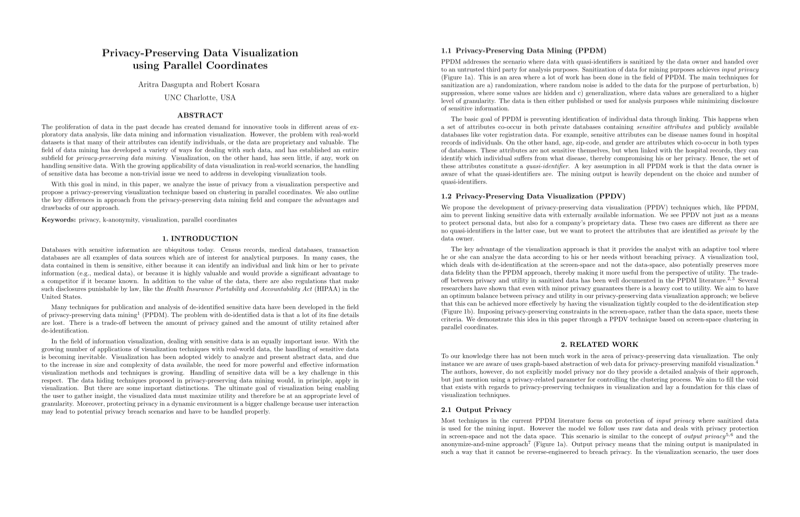
Privacy-Preserving Data Visualization using Parallel Coordinates

The proliferation of data in the past decade has created demand for innovative tools in different areas of exploratory data analysis, like data mining and information visualization. However, the problem with real-world datasets is that many of their attributes can identify individuals, or the data are proprietary and valuable. The field of data mining has developed a variety of ways for dealing with such data, and has established an entire subfield for privacy-preserving data mining.… [More]

PDF DOI
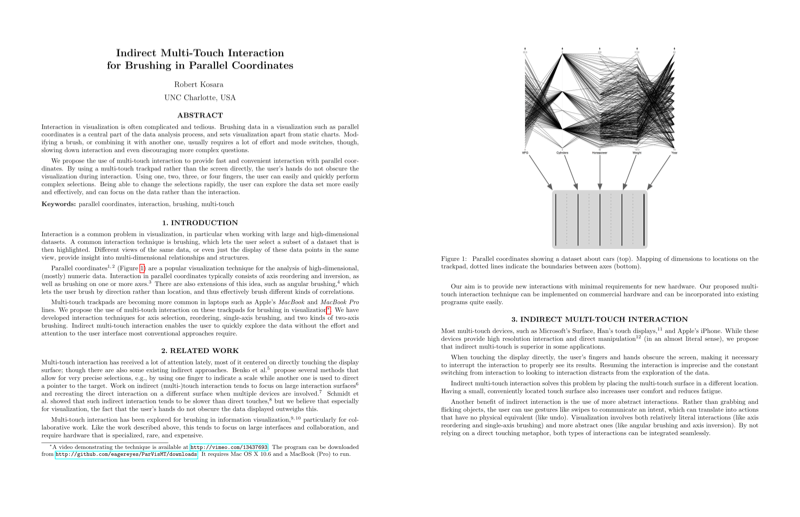
Indirect Multi-Touch Interaction for Brushing in Parallel Coordinates

Interaction in visualization is often complicated and tedious. Brushing data in a visualization such as parallel coordinates is a central part of the data analysis process, and sets visualization apart from static charts. Modifying a brush, or combining it with another one, usually requires a lot of effort and mode switches, though, slowing down interaction and even discouraging more complex questions. We propose the use of multi-touch interaction to provide fast and convenient interaction with… [More]

PDF DOI
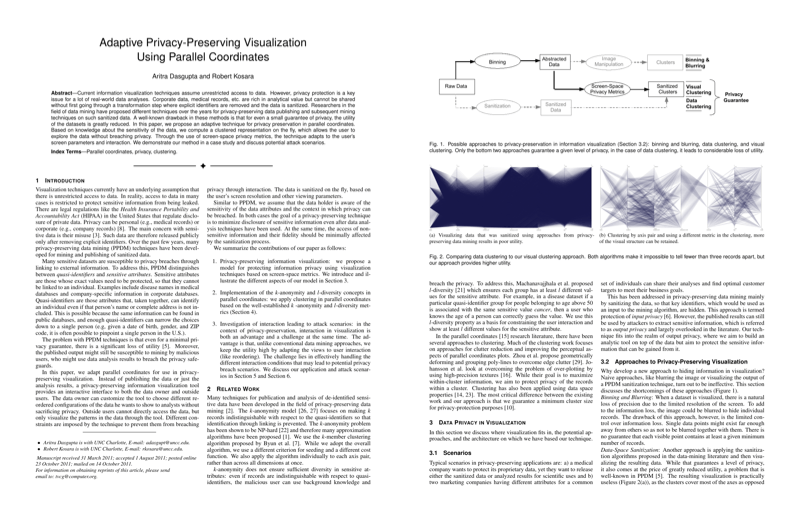
Adaptive Privacy-Preserving Visualization Using Parallel Coordinates

Current information visualization techniques assume unrestricted access to data. However, privacy protection is a key issue for a lot of real-world data analyses. Corporate data, medical records, etc. are rich in analytical value but cannot be shared without first going through a transformation step where explicit identifiers are removed and the data is sanitized. Researchers in the field of data mining have proposed different techniques over the years for privacy-preserving data publishing and… [More]

PDF DOI
Thumbnail for Laws of Attraction: From Perceived Forces to Conceptual Similarity

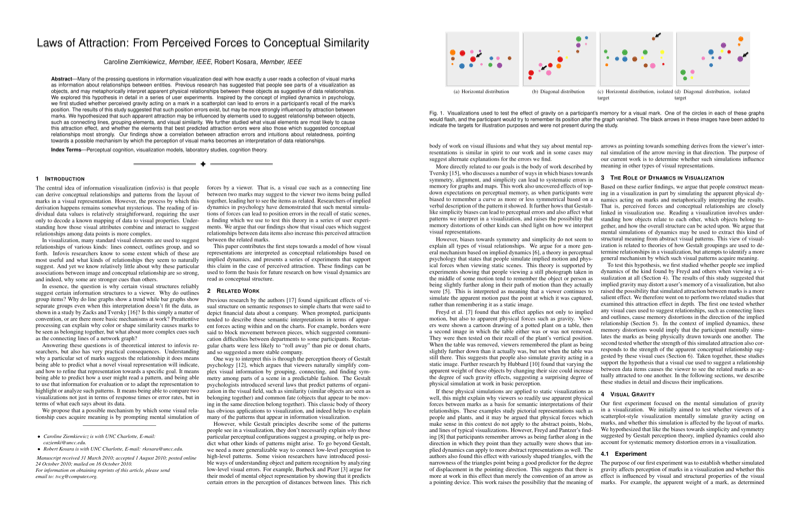
Laws of Attraction: From Perceived Forces to Conceptual Similarity

Many of the pressing questions in information visualization deal with how exactly a user reads a collection of visual marks as information about relationships between entities. Previous research has suggested that people see parts of a visualization as objects, and may metaphorically interpret apparent physical relationships between these objects as suggestive of data relationships. We explored this hypothesis in detail in a series of user experiments. Inspired by the concept of implied dynamics… [More]

PDF DOI
Thumbnail for Pargnostics: Screen-Space Metrics for Parallel Coordinates

Pargnostics: Screen-Space Metrics for Parallel Coordinates

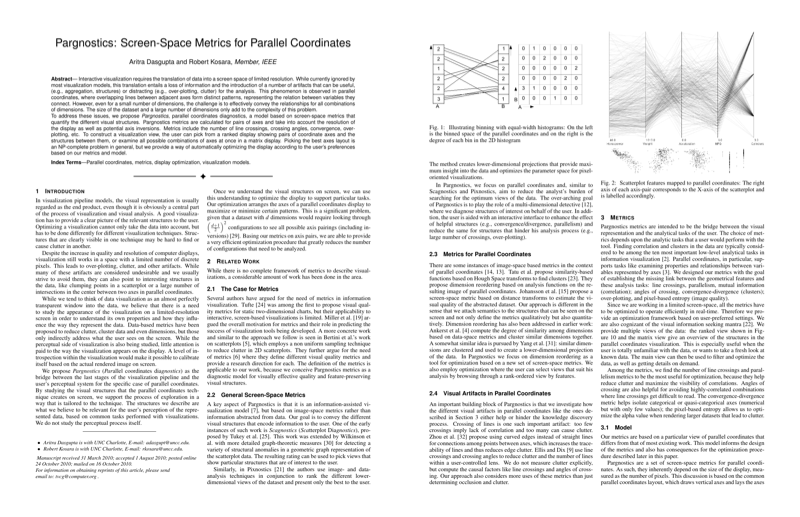
Interactive visualization requires the translation of data into a screen space of limited resolution. While currently ignored by most visualization models, this translation entails a loss of information and the introduction of a number of artifacts that can be useful, (e.g., aggregation, structures) or distracting (e.g., over-plotting, clutter) for the analysis. This phenomenon is observed in parallel coordinates, where overlapping lines between adjacent axes form distinct patterns, representing… [More]

PDF DOI
Indirect Multi-Touch Interaction for Brushing in Parallel Coordinates

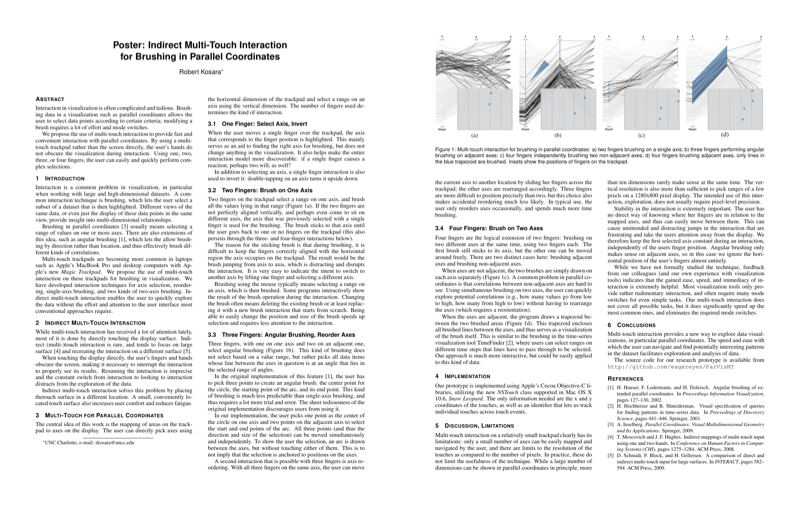
Interaction in visualization is often complicated and tedious. Brushing data in a visualization such as parallel coordinates allows the user to select data points according to certain criteria; modifying a brush requires a lot of effort and mode switches. We propose the use of multi-touch interaction to provide fast and convenient interaction with parallel coordinates. By using a multi-touch trackpad rather than the screen directly, the user’s hands do not obscure the visualization during… [More]

PDF

Embedding Information Visualization Within Visual Representation

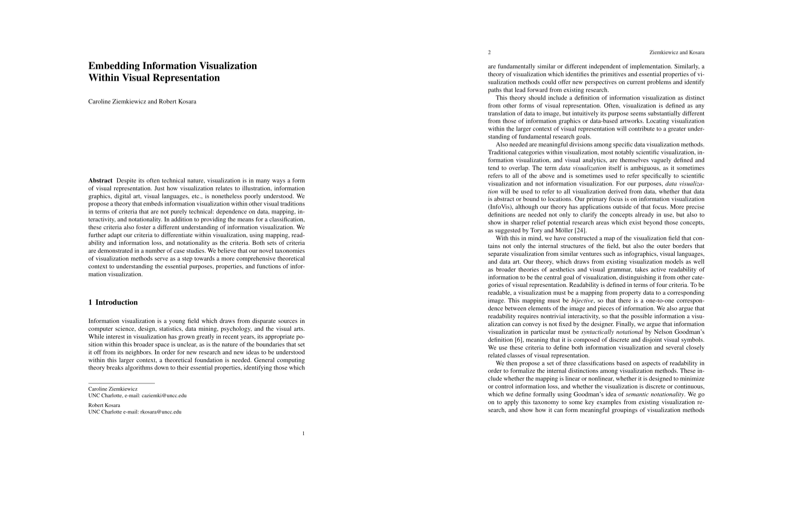
Despite its often technical nature, visualization is in many ways a form of visual representation. Just how visualization relates to illustration, information graphics, digital art, visual languages, etc., is nonetheless poorly understood. We propose a theory that embeds information visualization within other visual traditions in terms of criteria that are not purely technical: dependence on data, mapping, interactivity, and notationality. In addition to providing the means for a classification,… [More]

PDF DOI
Thumbnail for Implied Dynamics in Information Visualization

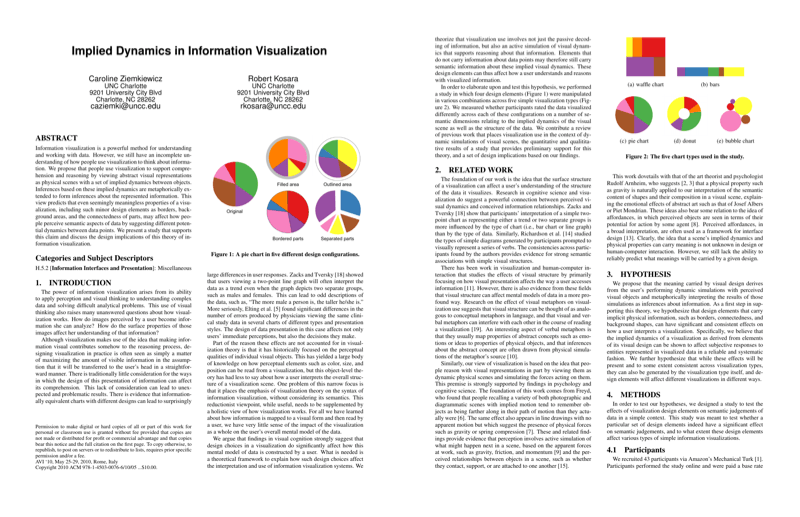
Implied Dynamics in Information Visualization

Information visualization is a powerful method for understanding and working with data. However, we still have an incomplete understanding of how people use visualization to think about information. We propose that people use visualization to support comprehension and reasoning by viewing abstract visual representations as physical scenes with a set of implied dynamics between objects. Inferences based on these implied dynamics are metaphorically extended to form inferences about the represented… [More]

PDF DOI
Thumbnail for Do Mechanical Turks Dream of Square Pie Charts?

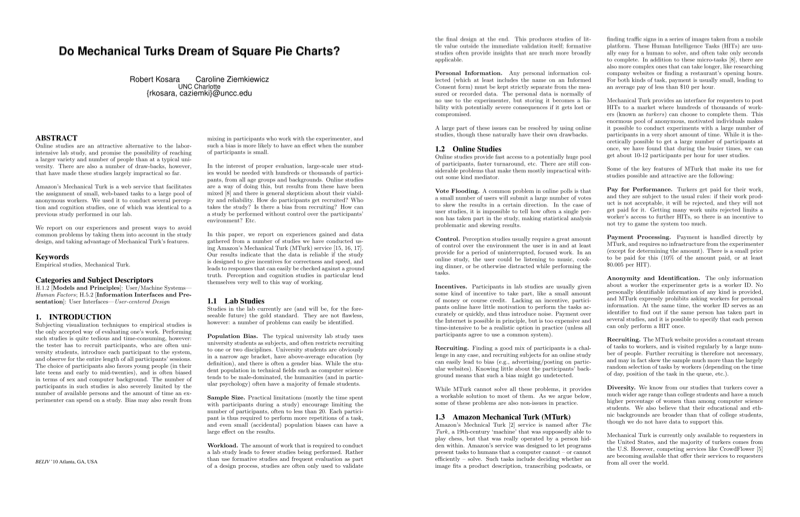
Do Mechanical Turks Dream of Square Pie Charts?

Online studies are an attractive alternative to the labor- intensive lab study, and promise the possibility of reaching a larger variety and number of people than at a typical university. There are also a number of draw-backs, however, that have made these studies largely impractical so far. Amazon’s Mechanical Turk is a web service that facilitates the assignment of small, web-based tasks to a large pool of anonymous workers. We used it to conduct several perception and cognition studies, one… [More]

PDF DOI
Thumbnail for Beyond Bertin: Seeing the Forest despite the Trees

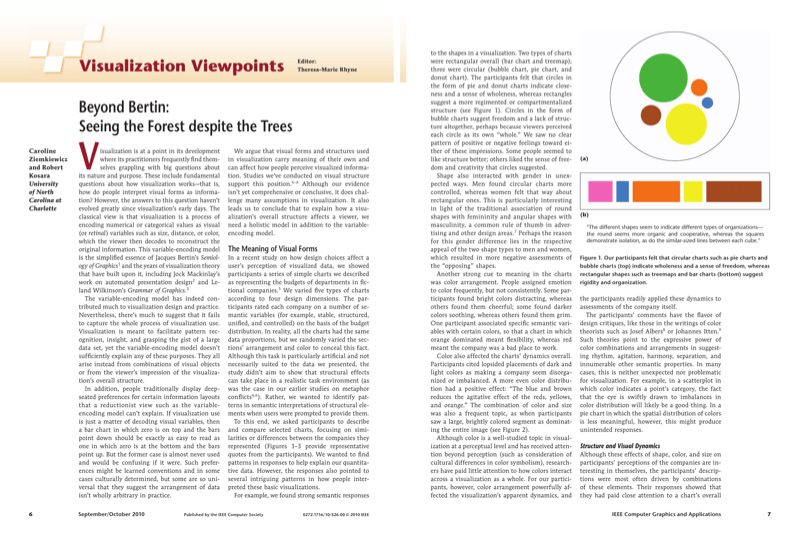
Beyond Bertin: Seeing the Forest despite the Trees

Visualization is at a point in its development where its practitioners frequently find themselves grappling with big questions about its nature and purpose. These include fundamental questions about how visualization works—that is, how do people interpret visual forms as information? Classical visualization theory sees this as a process of encoding data variables as visual variables, which the viewer then decodes. Although this body of theory is useful, it doesn’t account for visual structure’s… [More]

PDF DOI
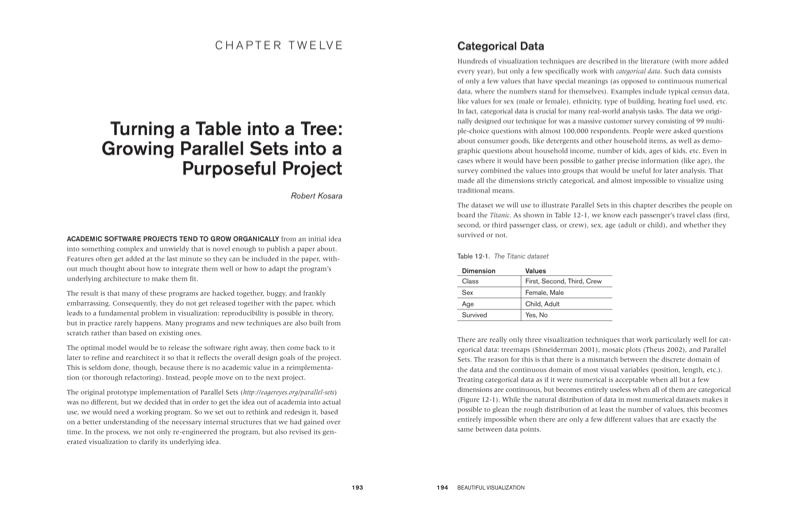
Turning a Table into a Tree: Growing Parallel Sets into a Purposeful Project

Academic software projects tend to grow organically from an initial idea into something complex and unwieldy that has enough novelty to publish a paper about. Features get added at the last minute to be able to include them in the paper, without much time to think about how to integrate them well – or how to adapt the underlying architecture of the entire program to make them fit. The result is that many of these programs are hacked together, buggy, and embarrassing. Consequently, they do not… [More]

PDF

Parallel Sets in the Real World: Three Case Studies

Parallel Sets are a visualization technique for categorical data. We recently released an implementation to the public in an effort to make our research useful to real users. This paper presents three case studies of Parallel Sets in use with real data.

PDF

Design Elements and the Perception of Information Structure

While there has been significant research on how low-level perceptual elements contribute to a user’s ability to compare or discern data points, less is known about how seemingly meaningless properties of a visual scene contribute to the perception of information structure. We present the results of a study in which participants viewed five types of simple data visualizations that supposedly depicted information about the departmental structure of a series of companies. Although the underlying… [More]

PDF

Towards A Role of Visualization in Social Modeling

The traditional role of visualization in large scale social modeling projects has mostly been relegated to presentation and reporting. While these projects see the potential of communicating information visually, the visualization component has too often been considered as the final stage of a long process, sometimes as a last- minute add-on. The result is that these visualization components are limited in capabilities, and often appear disjointed and forced from the rest of the project. In this… [More]

PDF

Preconceptions and Individual Differences in Understanding Visual Metaphors

Understanding information visualization is more than a matter of reading a series of data values; it is also a matter of incorporating a visual structure into one's own thinking about a problem. We have proposed visual metaphors as a framework for understanding high-level visual structure and its effect on visualization use. Although there is some evidence that visual metaphors can affect visualization use, the nature of this effect is still ambiguous. We propose that a user's preconceived… [More]

PDF DOI
Visual Analysis of Entity Relationships in Global Terrorism Database

With the increase of terrorist activity around the world, it has become more important than ever to analyze and understand these activities over time. Although the data on terrorist activities are detailed and relevant, the complexity of the data has rendered the understanding and analysis difficult. We present a visual analytical approach to effectively identify related entities such as terrorist groups, events, locations, etc. based on a 2D layout. Our methods are based on sequence comparison… [More]

PDF DOI
Thumbnail for The Shaping of Information by Visual Metaphors

The Shaping of Information by Visual Metaphors

The nature of an information visualization can be considered to lie in the visual metaphors it uses to structure information. The process of understanding a visualization therefore involves an interaction between these external visual metaphors and the user’s internal knowledge representations. To investigate this claim, we conducted an experiment to test the effects of visual and verbal metaphor on the understanding of tree visualizations. Participants answered simple data comprehension… [More]

PDF DOI
Scalable and Interactive Visual Analysis of Financial Wire Transactions for Fraud Detection

Large financial institutions such as Bank of America handle hundreds of thousands of wire transactions per day. Although most transactions are legitimate, these institutions have legal and financial obligations in discovering those that are suspicious. With the methods of fraudulent activities ever changing, searching on predefined patterns is often insufficient in detecting previously undiscovered methods. In this paper, we present a set of coordinated visualizations based on identifying… [More]

PDF DOI

Visual Data Mining of Unevenly-Spaced Event Sequences

We present a process for the exploration and analysis of large databases of events. A typical database is characterized by the sequential actions of a number of individual entities. These entities can be compared by their similarities in sequence and changes in sequence over time. The correlation of two sequences can provide important clues as to the possibility of a connection between the responsible entities, but an analyst might not be able to specify the type of connection sought prior to… [More]

PDF
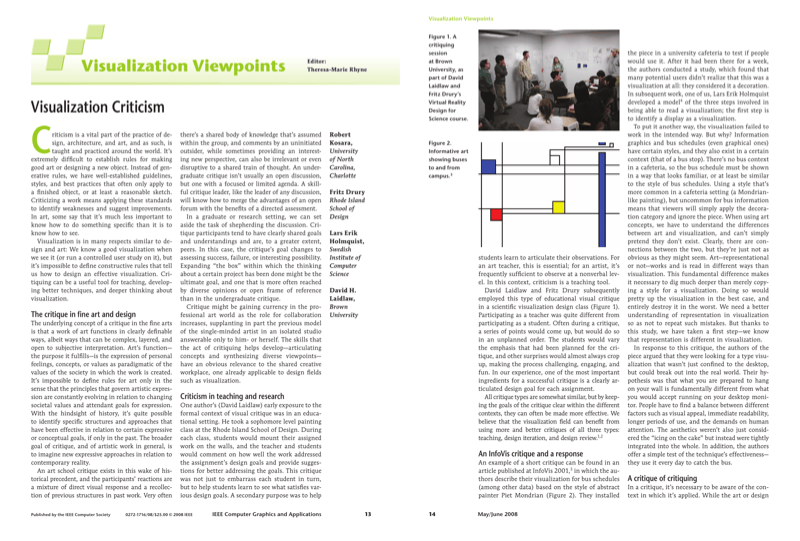
Thumbnail for Visualization Criticism

Visualization Criticism

Criticism is a vital part of the practice of design, architecture, and art, and as such is taught and practiced around the world. It is extremely difficult – if not impossible – to establish rules for making good art or designing a new object. Instead of generative rules, there are well-established guidelines, styles, and best practices that often only apply to a finished object, or at least a reasonable sketch. Criticizing a work means applying these standards to identify weaknesses and suggest… [More]

PDF DOI

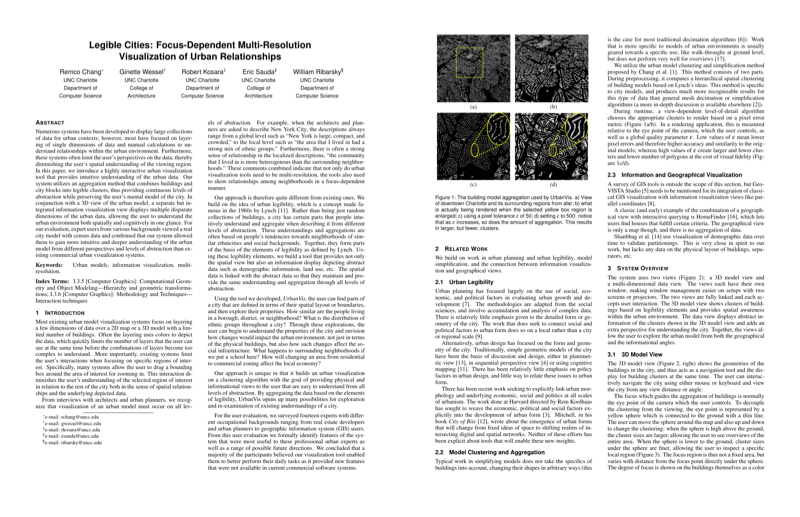
A Data Warehouse for Collection and Visual Analysis of Genomic Data

Legible Cities: Multi-Resolution Visualization of Urban Relationships

Numerous systems have been developed to display large collections of data for urban contexts; however, most have focused on layering of single dimensions of data and manual calculations to understand relationships within the urban environment. Furthermore, these systems often limit the user's perspectives on the data, thereby diminishing the user's spatial understanding of the viewing region. In this paper, we introduce a highly interactive urban visualization tool that provides intuitive… [More]

PDF DOI

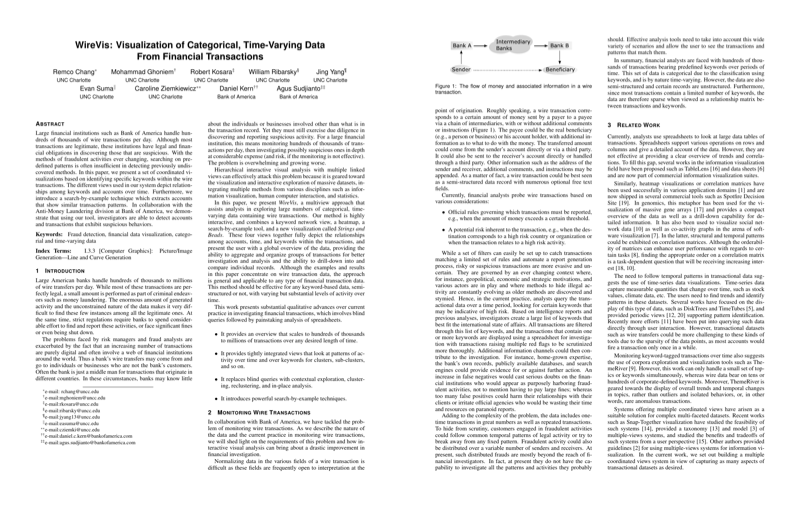
WireVis: Visualization of Categorical, Time-Varying Financial Transaction Data

Large financial institutions such as Bank of America handle hundreds of thousands of wire transactions per day. Although most transactions are legitimate, these institutions have legal and financial obligations in discovering those that are suspicious. With the methods of fraudulent activities ever changing, searching on predefined patterns is often insufficient in detecting previously undiscovered methods. In this paper, we present a set of coordinated visualizations based on identifying… [More]

PDF DOI

Visualization and the Nature of Representation

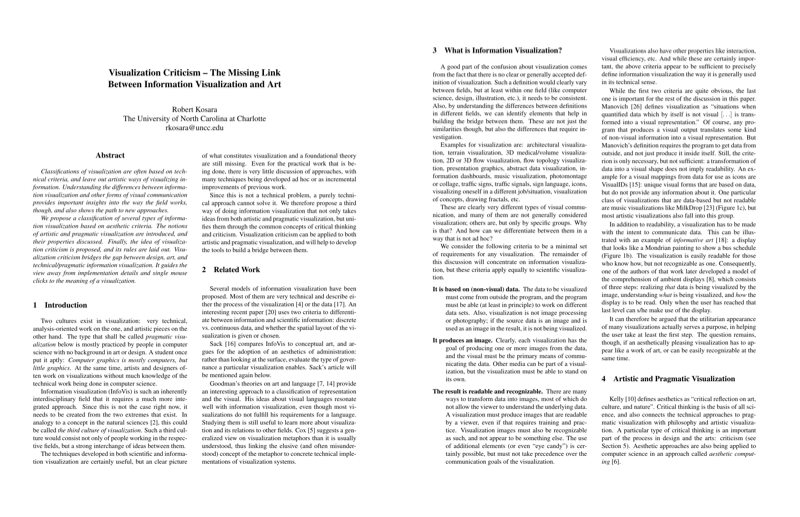
Visualization Criticism – The Missing Link Between Information Visualization and Art

Classifications of visualization are often based on technical criteria, and leave out artistic ways of visualizing information. Understanding the differences between information visualization and other forms of visual communication provides important insights into the way the field works, though, and also shows the path to new approaches. We propose a classification of several types of information visualization based on aesthetic criteria. The notions of artistic and pragmatic visualization are… [More]

PDF DOI

Human-Centered Aspects

Challenges and Unsolved Problems

Interactive Focus+Context Analysis of Large, Time-Dependent Flow Simulation Data

The visualization of time-dependent simulation data, such as data sets from computational fluid dynamics (CFD) simulation, is still a very challenging task. In this paper, we present a new approach for the interactive visual analysis of flow simulation data, which is especially targeted at the analysis of time-dependent data. This supports the flexible specification and visualization of flow features in an interactive setup of multiple linked views. Special emphasis is put on new mechanisms to… [More]

Parallel Sets: Interactive Exploration and Visual Analysis of Categorical Data

Categorical data dimensions appear in many real-world data sets, but few visualization methods exist that properly deal with them. Parallel Sets are a new method for the visualization and interactive exploration of categorical data that shows data frequencies instead of the individual data points. The method is based on the axis layout of parallel coordinates, with boxes representing the categories and parallelograms between the axes showing the relations between categories. In addition to the… [More]

PDF DOI

Pharmacophores from Macromolecular Complexes with LigandScout

Parallel Sets: Visual Analysis of Categorical Data

The discrete nature of categorical data makes it a particular challenge for visualization. Methods that work very well for continuous data are often hardly usable with categorical dimensions. Only few methods deal properly with such data, mostly because of the discrete nature of categorical data, which does not translate well into the continuous domains of space and color. Parallel Sets is a new visualization method that adopts the layout of parallel coordinates, but substitutes the individual… [More]

PDF DOI

Interactive Focus+Context Visualization with Linked 2D/3D Scatterplots

Scatterplots in 2D and 3D are very useful tools, but also suffer from a number of problems. Overplotting hides the true number of points that are displayed, and showing point clouds in 3D is problematic both in terms of perception and interaction. We propose a combination of 2D and 3D scatterplots, together with some extensions to overcome these problems. By linking 2D and 3D views, it is possible to interact in 2D and get feedback in 3D. That feedback is also enhanced by depth cues (color and… [More]

PDF DOI

Facilitating Knowledge Maintenance of Clinical Guidelines and Protocols

Clinical protocols and guidelines are widely used in the medical domain to improve disease management techniques. Different software systems are in development to support the design and the execution of such guidelines. The bottleneck in the guideline software developing process is the transformation of the text-based clinical guidelines into a formal representation, which can be used by the execution software. This paper introduces a method and a tool that was designed to provide a solution for… [More]

PDF DOI

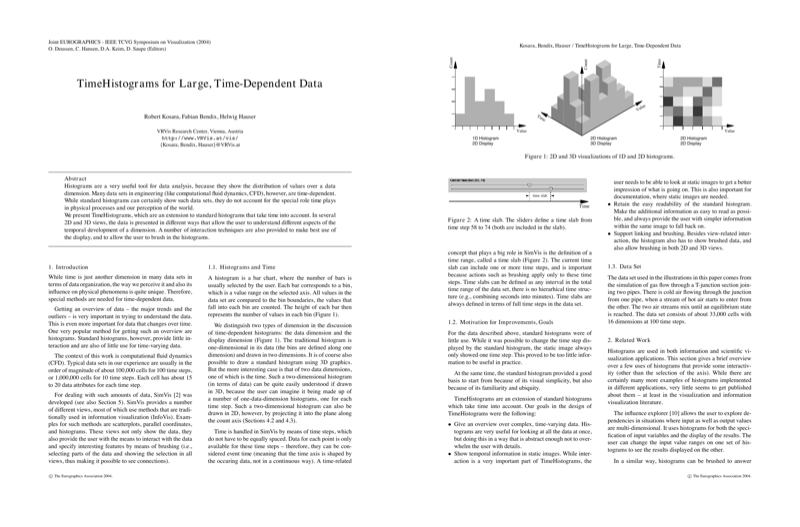
TimeHistograms for Large, Time-Dependent Data

Histograms are a very useful tool for data analysis, because they show the distribution of values over a data dimension. Many data sets in engineering (like computational fluid dynamics, CFD), however, are time-dependent. While standard histograms can certainly show such data sets, they do not account for the special role time plays in physical processes and our perception of the world. We present TimeHistograms, which are an extension to standard histograms that take time into account. In… [More]

PDF DOI

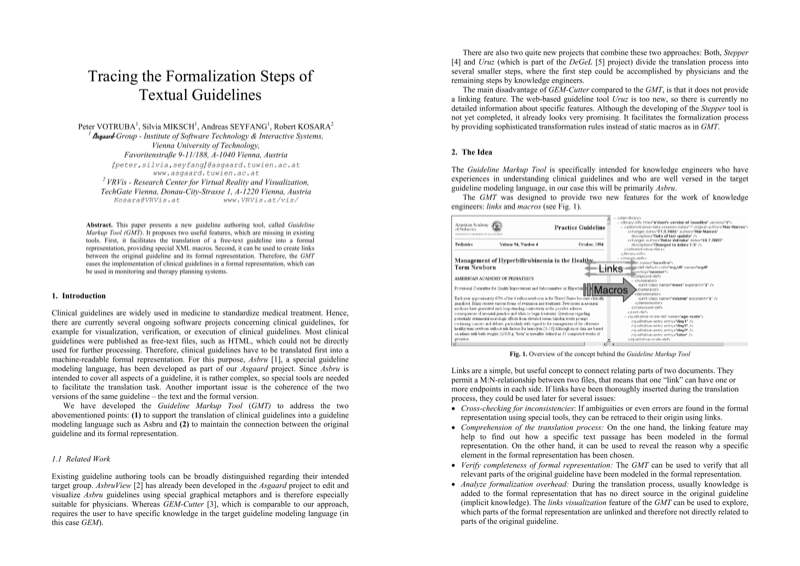
Tracing the Formalization Steps of Textual Guidelines

This paper presents a new guideline authoring tool, called Guideline Markup Tool (GMT). It proposes two useful features, which are missing in existing tools. First, it facilitates the translation of a free-text guideline into a formal representation, providing special XML macros. Second, it can be used to create links between the original guideline and its formal representation. Therefore, the GMT eases the implementation of clinical guidelines in a formal representation, which can be used in… [More]

PDF DOI

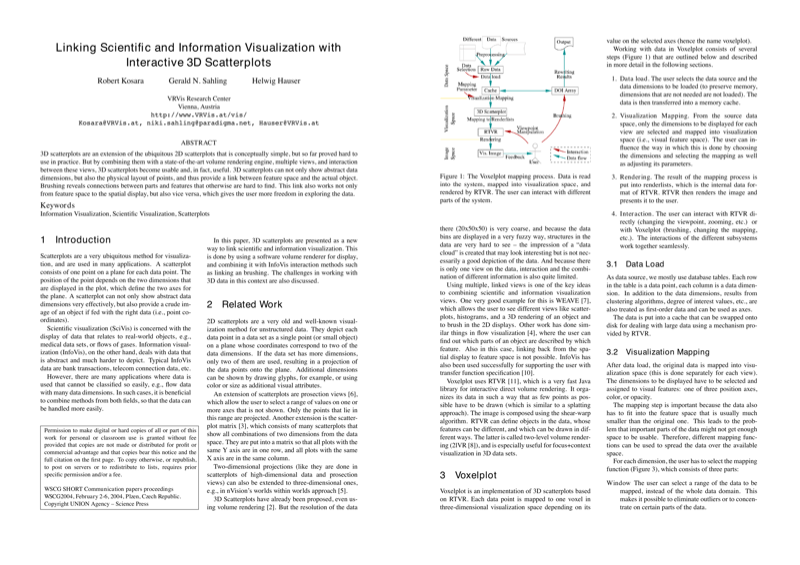
Linking Scientific and Information Visualization with Interactive 3D Scatterplots

3D scatterplots are an extension of the ubiquitous 2D scatterplots that is conceptually simple, but so far proved hard to use in practice. But by combining them with a state-of-the-art volume rendering engine, multiple views, and interaction between these views, 3D scatterplots become usable and, in fact, useful. 3D scatterplots can not only show abstract data dimensions, but also the physical layout of points, and thus provide a link between feature space and the actual object. Brushing reveals… [More]

PDF

The SimVis System for Interactive Visual Analysis of Flow Simulation Data

Interactive Analysis of High-Dimensional Data using Visualization

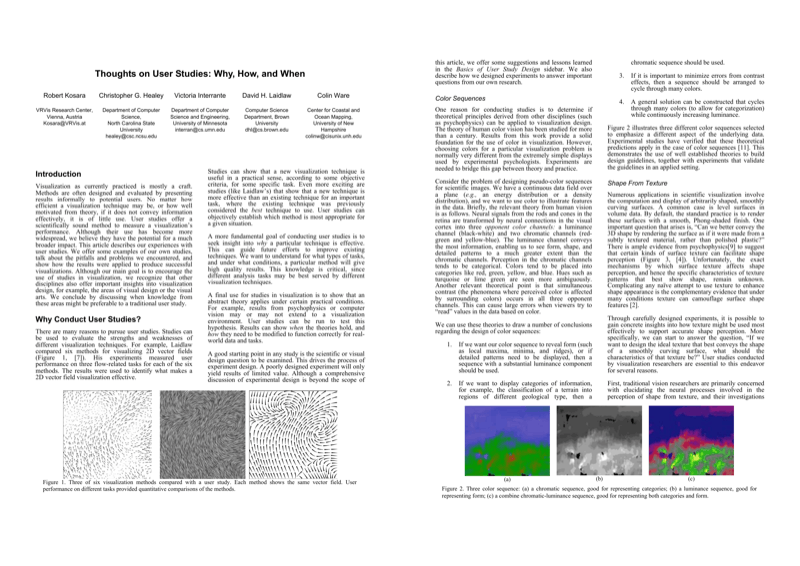
Thoughts on User Studies: Why, How, and When

In crafting today’s visualizations, we often design and evaluate methods by presenting results informally to potential users. No matter how efficient a visualization technique may be, or how well motivated from theory, if it doesn’t convey information effectively, it’s of little use.

PDF DOI

An Interaction View on Information Visualizatio

Information Visualization (InfoVis) encompasses techniques of visualization that deal primarily with abstract data, that is, data for which the user has no preconceived mental model. This is in contrast to, for example, volume or flow data. For this reason, interaction is particularly important in InfoVis: for exploration, analysis, and presentation of data. Interaction allows the user to implicitly form mental models of the correlations and relationships in the data, through recognition of… [More]

PDF DOI

Linking Clinical Guidelines with Formal Representations

Clinical guidelines have been used in the medical domain for some time now, primarily to reduce proneness to errors during the treatment of specific diseases. Recently, physicians have special software at their disposal, which supports them at decision-making based on computerized protocols and guidelines. Using such tools, physicians sometimes want to know the reason why the computer recommends a particular treatment method. To comprehend the suggestions, a connection between the original… [More]

PDF DOI

Experimental Evaluation of Semantic Depth of Field, a Preattentive Method for Focus+Context Visualization

This paper presents the results of a thorough user study that was performed to assess special features and the general usefulness of Semantic Depth of Field (SDOF). Semantic Depth of Field is a focus+context (F+C) technique that uses blur to point the user to the most relevant objects. SDOF was found to be an effective means for guiding the viewer’s attention and for giving him or her a quick overview of a data set.

PDF

Visualization Methods for Data Analysis and Planning in Medical Applications

Time plays an important role in medicine, both the past and the future. The medical history of a patient represents the past, which needs to be understood by the physician to make the right decisions. The past contains two different kinds of information: measured data (such as blood pressure) and incidents (such as seizures). Planning therapies, on the other hand, requires looking into the future to a certain extent. Visual representations exist for both the past and the future, and they are… [More]

PDF DOI

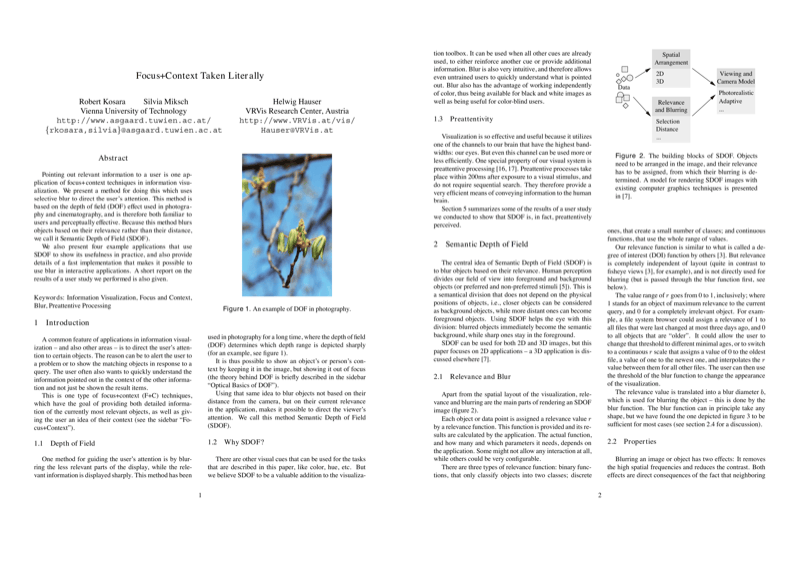
Focus+Context Taken Literally

Pointing out relevant information to a user is one application of focus+context techniques in information visualization. We present a method for doing this which uses selective blur to direct the user’s attention. This method is based on the depth of field (DOF) effect used in photography and cinematography, and is therefore both familiar to users and perceptually effective. Because this method blurs objects based on their relevance rather than their distance, we call it Semantic Depth of Field… [More]

PDF DOI

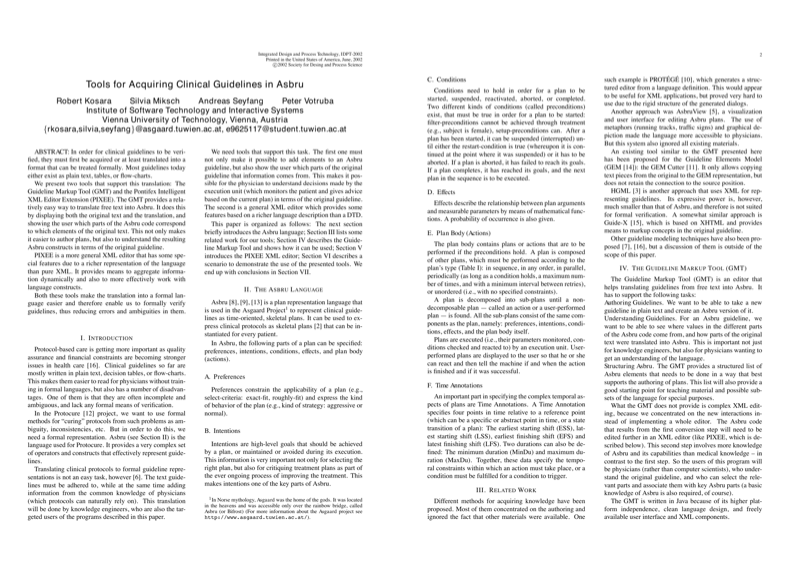
Tools for Acquiring Clinical Guidelines in Asbru

In order for clinical guidelines to be verified, they must first be acquired or at least translated into a format that can be treated formally. Most guidelines today either exist as plain text, tables, or flow-charts. We present two tools that support this translation: The Guideline Markup Tool (GMT) and the Pontifex Intelligent XML Editor Extension (PIXEE). The GMT provides a relatively easy way to translate free text into Asbru. It does this by displaying both the original text and the… [More]

PDF

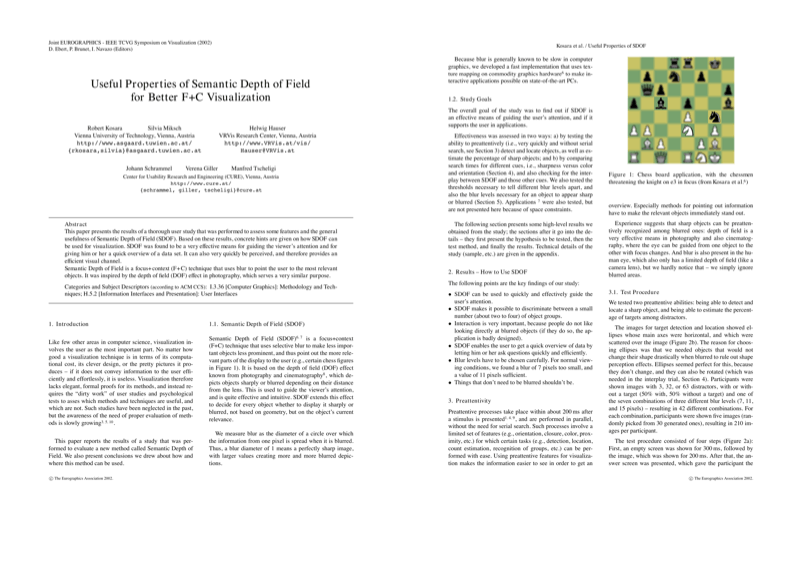
Useful Properties of Semantic Depth of Field for Better F+C Visualization

This paper presents the results of a thorough user study that was performed to assess some features and the general usefulness of Semantic Depth of Field (SDOF). Based on these results, concrete hints are given on how SDOF can be used for visualization. SDOF was found to be a very effective means for guiding the viewer’s attention and for giving him or her a quick overview of a data set. It can also very quickly be perceived, and therefore provides an efficient visual channel. Semantic Depth of… [More]

PDF DOI

AsbruView: Capturing Complex, Time-oriented Plans – Beyond Flow-Charts

Flow charts are one of the standard means of representing actions or algorithms in many domains. However, applying flow charts in dynamically changing environments, like clinical treatment planning, reveals their limitations. Flow charts do not include the temporal dimension in their design, do not allow complex paths through many components, and scale very badly. These are only some of the requirements for a means of communicating clinical therapy plans. As an alternative, a plan-representation… [More]

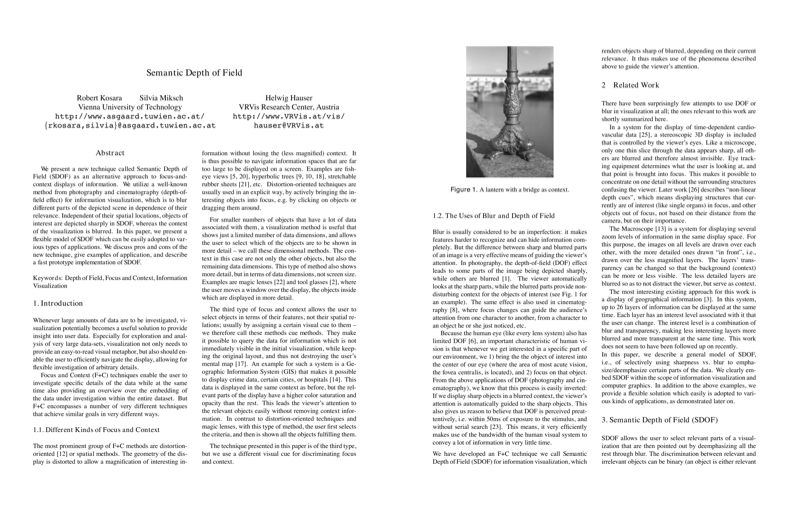
Semantic Depth of Field

We present a new technique called Semantic Depth of Field (SDOF) as an alternative approach to focus-and-context displays of information. We utilize a well-known method from photography and cinematography (depth-of-field effect) for information visualization, which is to blur different parts of the depicted scene in dependence of their relevance. Independent of their spatial locations, objects of interest are depicted sharply in SDOF, whereas the context of the visualization is blurred. In this… [More]

PDF DOI

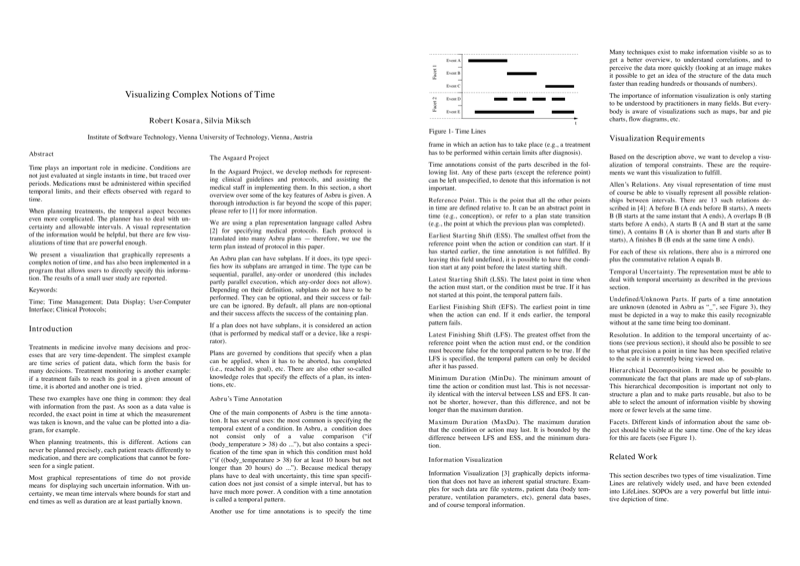
Visualizing Complex Notions of Time

Time plays an important role in medicine. Conditions are not just evaluated at single instants in time, but traced over periods. Medications must be administered within specified temporal limits, and their effects observed with regard to time. When planning treatments, the temporal aspect becomes even more complicated. The planner has to deal with uncertainty and allowable intervals. A visual representation of the information would be helpful, but there are few visualizations of time that are… [More]

PDF

Plan Management: Supporting All Steps of Protocol Development and Deployment

Is Workflow Management Appropriate for Therapy Planning?

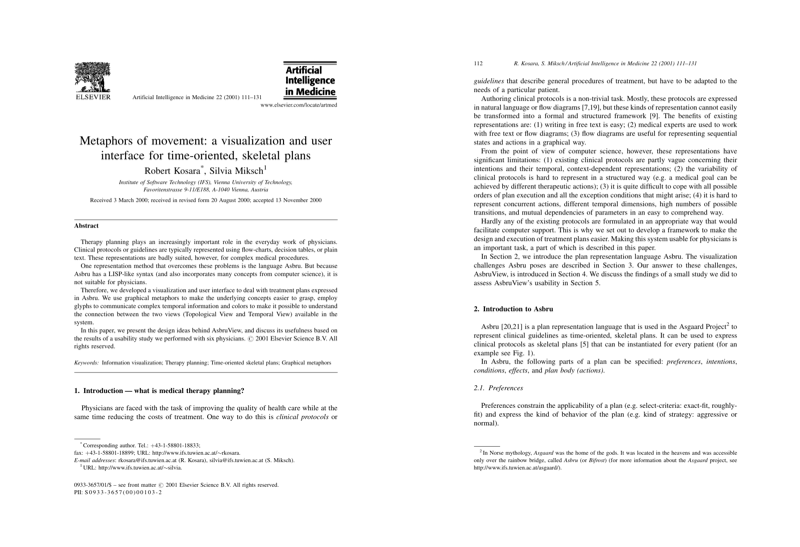
Metaphors of Movement: A Visualization and User Interface for Time-Oriented, Skeletal Plans

Therapy planning plays an increasingly important role in the everyday work of physicians. Clinical protocols or guidelines are typically represented using ̄ow-charts, decision tables, or plain text. These representations are badly suited, however, for complex medical procedures. One representation method that overcomes these problems is the language Asbru. But because Asbru has a LISP-like syntax (and also incorporates many concepts from computer science), it is not suitable for physicians.… [More]

PDF DOI

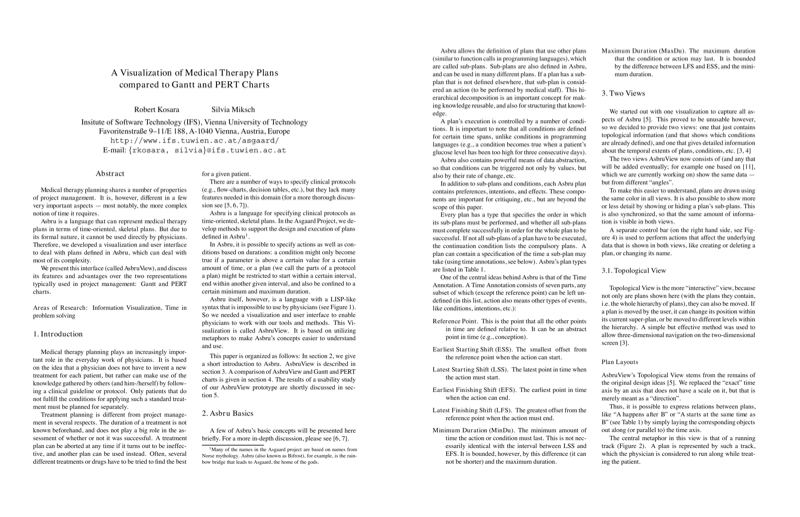
A Visualization of Medical Therapy Plans compared to Gantt and PERT Charts

Medical therapy planning shares a number of properties of project management. It is, however, different in a few very important aspects — most notably, the more complex notion of time it requires. Asbru is a language that can represent medical therapy plans in terms of time-oriented, skeletal plans. But due to its formal nature, it cannot be used directly by physicians. Therefore, we developed a visualization and user interface to deal with plans defined in Asbru, which can deal with most of its… [More]

PDF DOI

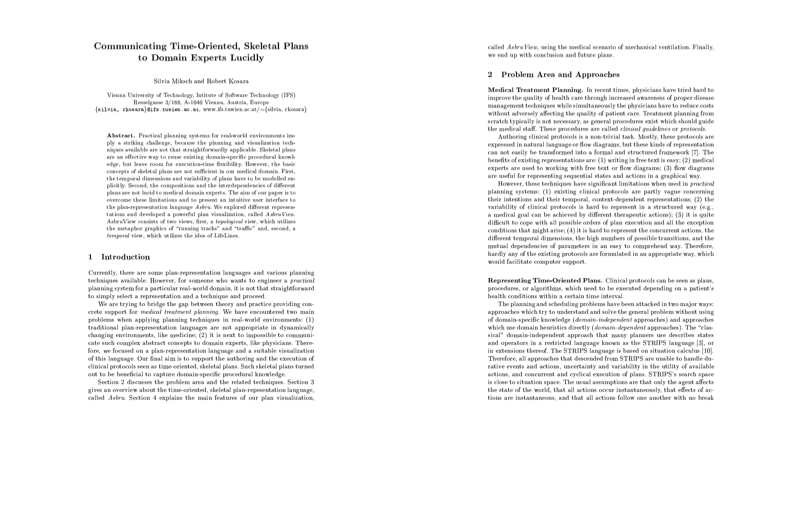
Communicating Time-Oriented, Skeletal Plans to Domain Experts Lucidly

Practical planning systems for real-world environments imply a striking challenge, because the planning and visualization techniques available are not that straightforwardly applicable. Skeletal plans are an effective way to reuse existing domain-specific procedural knowledge, but leave room for execution-time flexibility. However, the basic concepts of skeletal plans are not sufficient in our medical domain. First, the temporal dimensions and variability of plans have to be modelled explicitly.… [More]

PDF

Visualization Techniques for Time-Oriented, Skeletal Plans in Medical Therapy Planning

In order to utilize elaborate tools and techniques (like verication) for use with clinical protocols, these must be represented in an appropriate way. Protocols are typically represented by means of formal languages (e.g., Asbru), which are very hard to understand for medical experts and lead to many problems in practical use. Therefore, a powerful user interface is needed. We identify the key problems the user-interface designer is faced with, and present a number of "classic" solutions and… [More]

PDF

A User Interface for Manipulating Complex, Time-Oriented Treatment Plans

AsbruView: Capturing Complex, Time-oriented Plans – Beyond Flow-Charts

Flow charts are one of the standard means of representing actions or algorithms in many domains. However, applying flow charts in dynamically changing environments, like clinical treatment planning, reveals their limitations. Flow charts do not include the temporal dimension in their design, do not allow complex paths through many components, and scale very badly. These are only some of the requirements for a means of communicating clinical therapy plans. As an alternative, a plan-representation… [More]

PDF

AsbruView: Visualization of Time-Oriented, Skeletal Plans

Skeletal plans are a powerful way to reuse existing domain-specific procedural knowledge. The main drawbacks are that the compositions and the interdependencies of different skeletal plans and their components are not lucid. The aim of this paper is to overcome these limitations and to present the visualization of time-oriented, skeletal plans. Within the Asgaard project, we have developed a time-oriented and intention-based language, called Asbru, to represent such skeletal plans. The Asbru… [More]

PDF